I'm just back home after three intense days at Domain Summit 2026 in Kempten, Germany. While my head is still buzzing, I wanted to share the most useful insights with you while they're fresh: what makes a domain premium, whether you would trust AI to buy a $1M name, the next gTLD round, and how AI search reshapes brands.
I write this recap under the Chatham House Rule, which lets you use information from a meeting, but you can't reveal who said it or where they work.
As I invest in and broker digital assets like websites and online businesses, provide AI Visibility advisory, and offer Competitive Intelligence for digital businesses, attending Domain Summit was a great opportunity to meet the sharpest minds in the industry, including many friends and acquaintances.
Let’s get the ball rolling with the event recap:
Domain Names: what makes one “premium”
There was near-consensus in the room on what separates a premium domain from an ordinary one:
- Shorter is better. Length is still the first filter.
- Easy to pronounce. If you can say it once and someone can spell it back, that's value.
- The extension matters.
.comand.aiare leading the international sales charts right now.
None of this is new, but hearing it validated across so many operators at once is a useful reminder of where the fundamentals sit.
AI in Hosting and Domain Names Panel
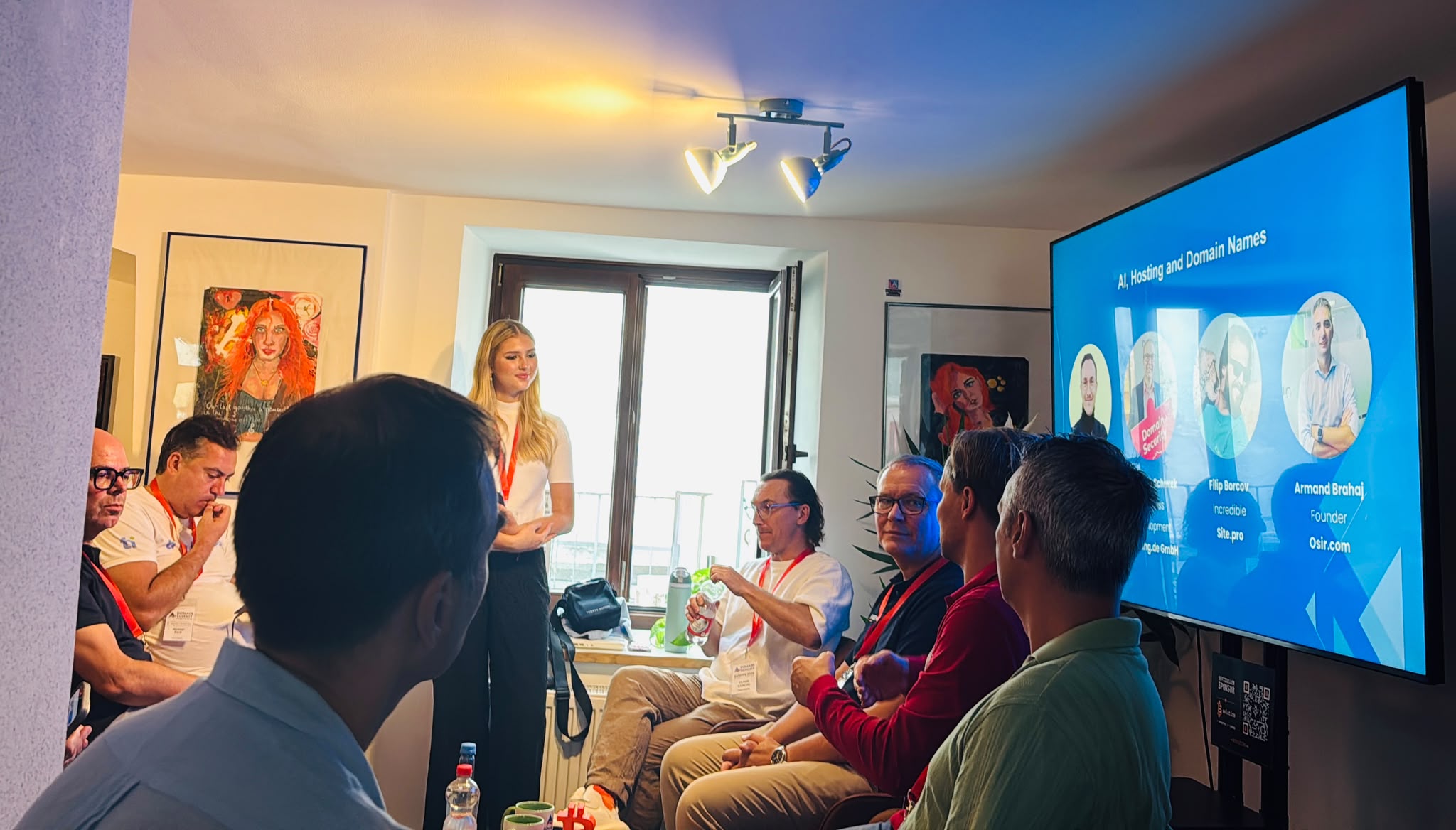
From left to right: Charlotte (Lotte) Riedl (main moderator of the event), Claus Barche (Tako by GMO), Frederick (Freddy) Schiwek (Hosting.de), Filip Borcov (Site.Pro), Armand Brahaj (Osir.com)
This panel sparked real controversy and was entertaining to watch as the panelists defended their opinions.
Some attendees are already applying AI heavily across their business. Others are far more reluctant: wary of handing over decisions, or concerned about where their data actually lives, and leaning toward self-hosted solutions as a result.
The question that left the room genuinely thinking:
Would you trust an AI to buy a $1M domain?
I don't think anyone had a clean answer. And that gap between how fast the tooling is moving and how much we feel safe delegating is where a lot of this industry will live for the next couple of years.
Personally, I don't think we're there yet, but an AI is only as good as the data it's trained on and its ability to retrieve new data.
So long as there is enough data and enough past successful cases to justify the decision, we will end up having AIs making business decisions with millions at stake. For many years, we’ve already witnessed automatic financial trading and programmatic advertising do well, and I’m sure AI adoption will give machines even more decision-making power.
Legal Discussion Panel
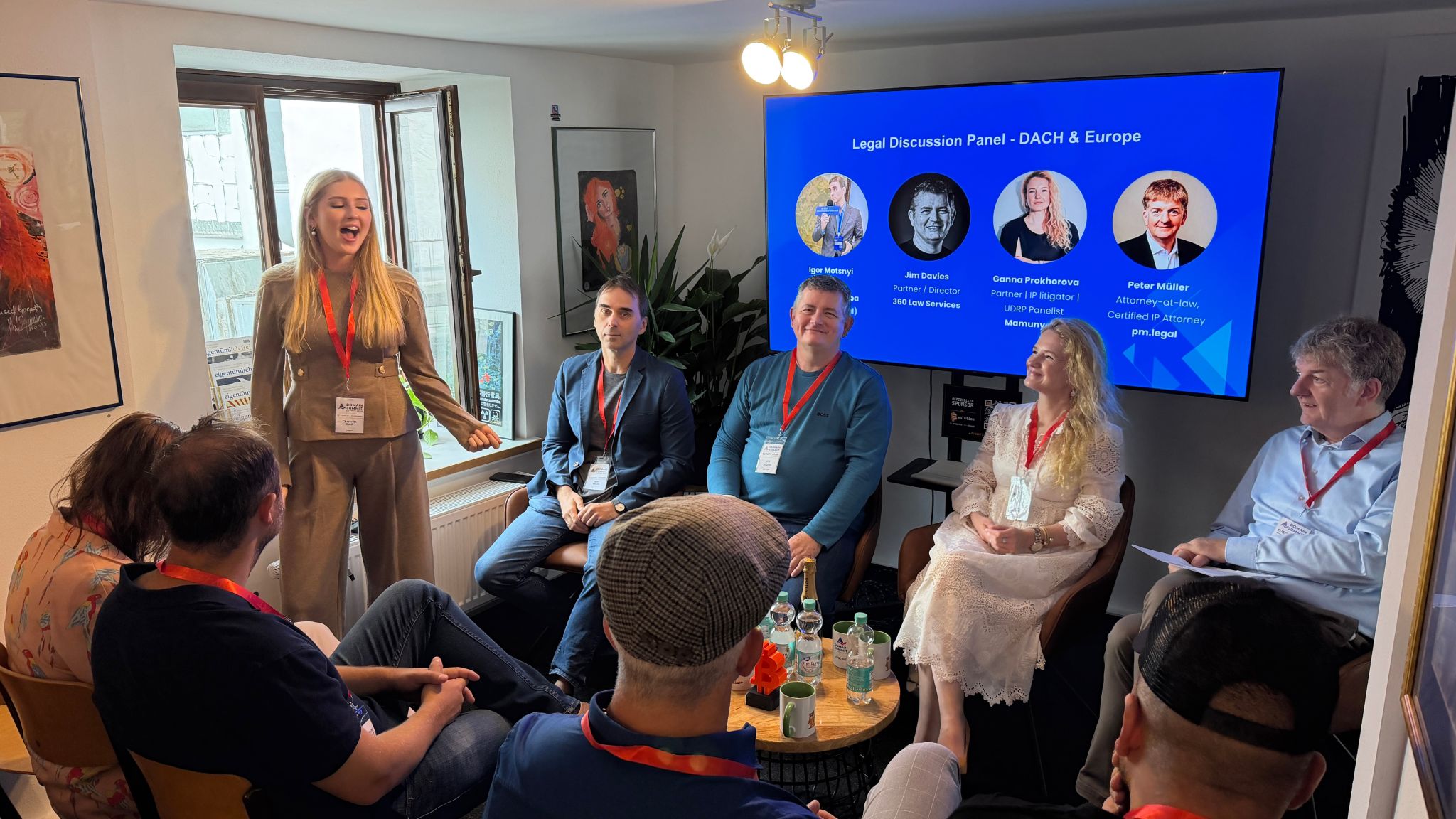
From left to right: Charlotte (Lotte) Riedl (main moderator of the event), Igor Motsnyi (Motsnyi IP), Jim Davies (360 Law Services), Ganna Prokhorova (Mamunya IP) and Peter Müller (pm.legal)
One of the more practically useful sessions. The panelists shared real insights from actual cases on domain ownership and trademarked domains.
My two takeaways:
- Always check whether a domain is already trademarked before investing in it. It's a ten-minute check that can save you from a very expensive mistake.
- Know how to respond to a UDRP. If you hold domains at any scale, this knowledge isn't optional.
New gTLDs: the next round is coming
There are over 1,600 applications in the new gTLD round, with roughly 1,100 carrying a “replacement,” essentially a backup second choice if the first application doesn't go through or the applicant wants to change it.
Some of the extensions I'm personally watching: .gram, .token, .swap, .bit, .coin
Applications go public mid-to-late October, so we'll all get a much clearer picture then.
Whether these new gTLDs turn out to be profitable is still an open question, but the panel landed on a principle I agree with: pricing has to be balanced. Too high and you scare off legitimate clients; too low and you invite spammers and abusers. Getting that balance right is what separates an extension people build real brands on from one that becomes a graveyard.
The importance of unique premium domains for AI Search
This one didn't come from a panel, but from conversations I had about AI visibility across the event. And it's the point I keep coming back to.
The old search model was simple: you searched for a product or service, got 10 blue links, and every click was a visitor. However, in an AI search environment, people (or agents) ask Claude or ChatGPT about a service today, and you'll often get back a brand name with no link. The user then has to search or type that brand directly to reach the site.
That changes the math entirely. When the AI hands someone a brand instead of a URL, your brand is your discoverability.
A unique, premium brand with a matching domain isn't a vanity purchase anymore; it's what stands between you and the visitors you'd otherwise quietly lose.
Other Panels
There were also other interesting panels like LLMs & Agents in Marketing: Our Experience, Domain Brokers & Marketplaces Domains, and AI and Email, which I unfortunately had to skip because I left early for my flight from Munich, which required a 3h train commute.
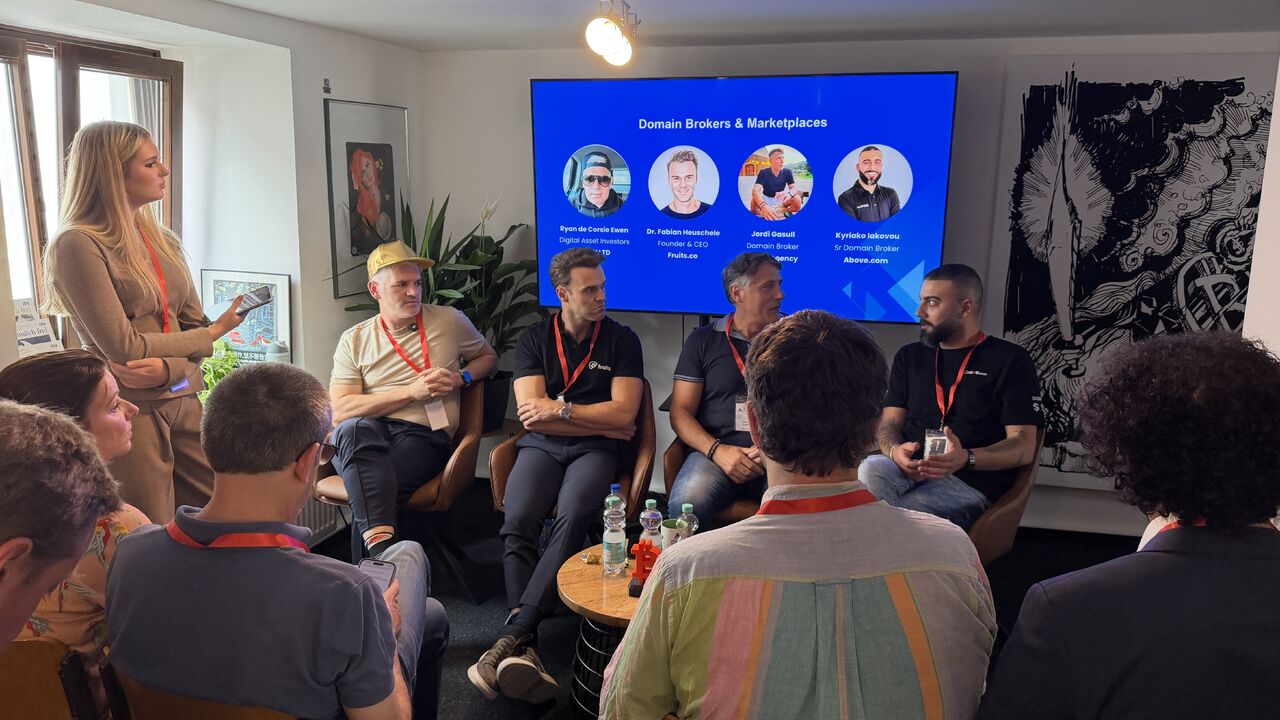
From left to right: Ryan de Corsie Ewen (EW3N LTD), Dr. Fabian Heuschele (Fruits.co), Jordi Gasull (Name Agency), Kyriako Iakovou (Above.com) in the Domain Brokers and Marketplaces panel.
The Venue
The venue itself set the tone. Together with Nauris of BitFit, MX12 helped mastermind and open Die Bitcoin Metropole, the Bitcoin-native venue in the heart of Kempten that hosted Domain Summit 2026. It is a place built for Bitcoiners, builders, curious minds, education, art, and community.
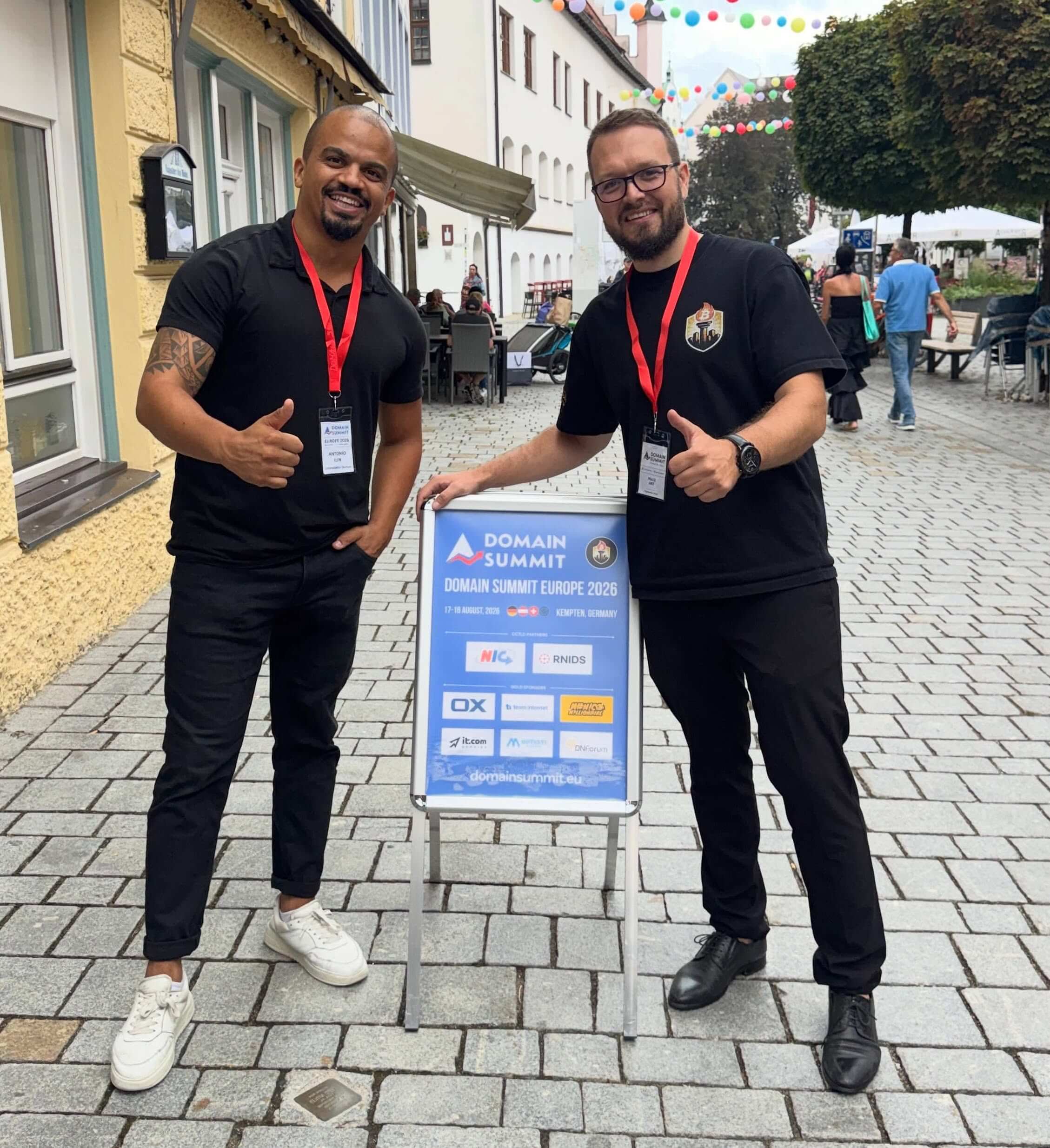
From left to right: Antonio (Constellation Domains) and MX12 (MX12.art)
MX12 has been a crypto artist since 2017, and he also documented the whole event and shared the photos with everyone, free to use. He took most of the pictures in the recap.
The real value was in the room.
This edition of Domain Summit was deliberately capped at around 65 people, largely invitation-only, a conscious move away from the bigger London-style conference toward something more intimate: fewer badges, more opportunities to get to know each other, and longer conversations.
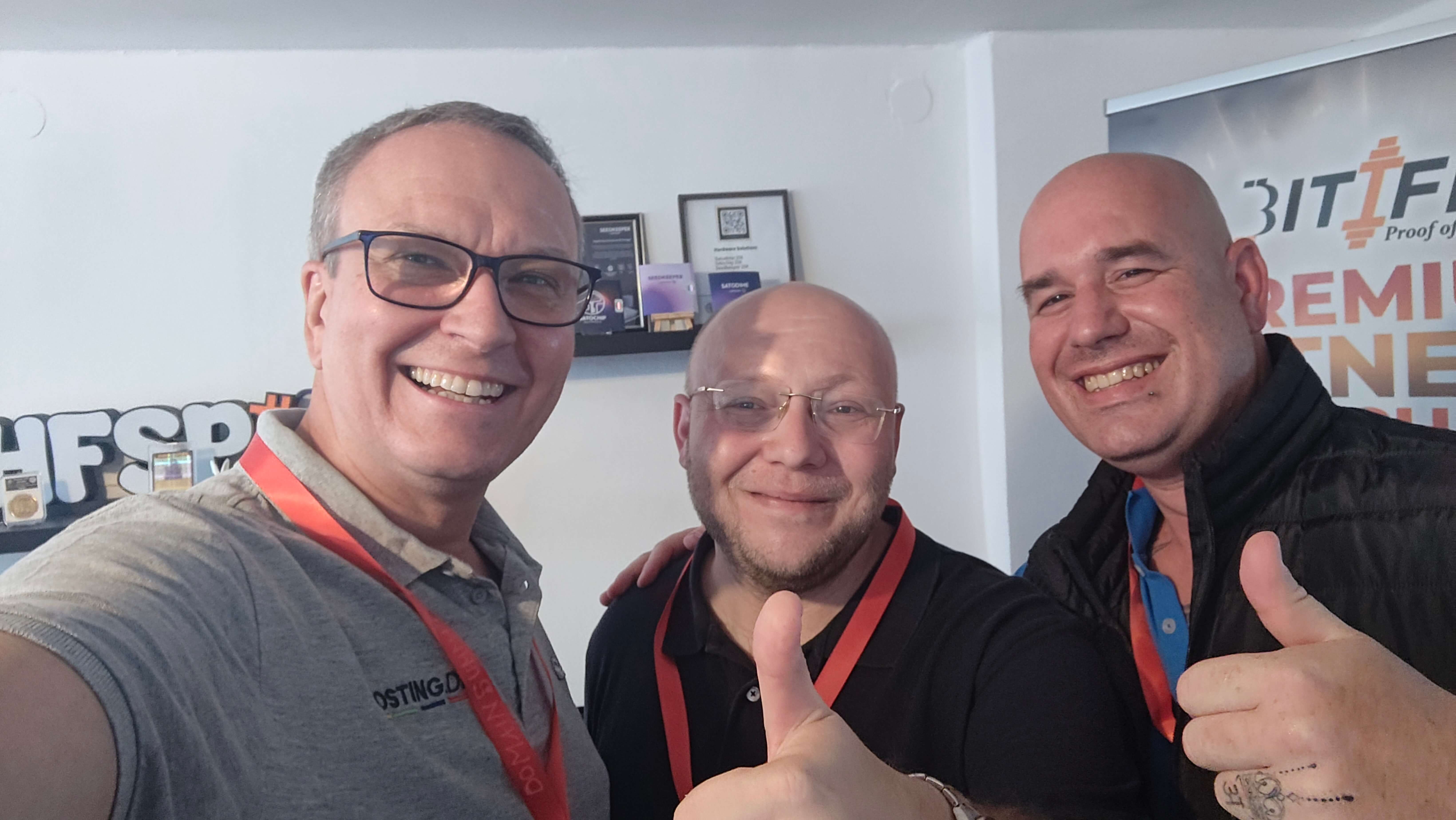
From left to right: Frederick (Freddy) Schiwek (Hosting.de), Daniel Stanica (Competico.com), Michiel Grotenhuis (BrandForge)
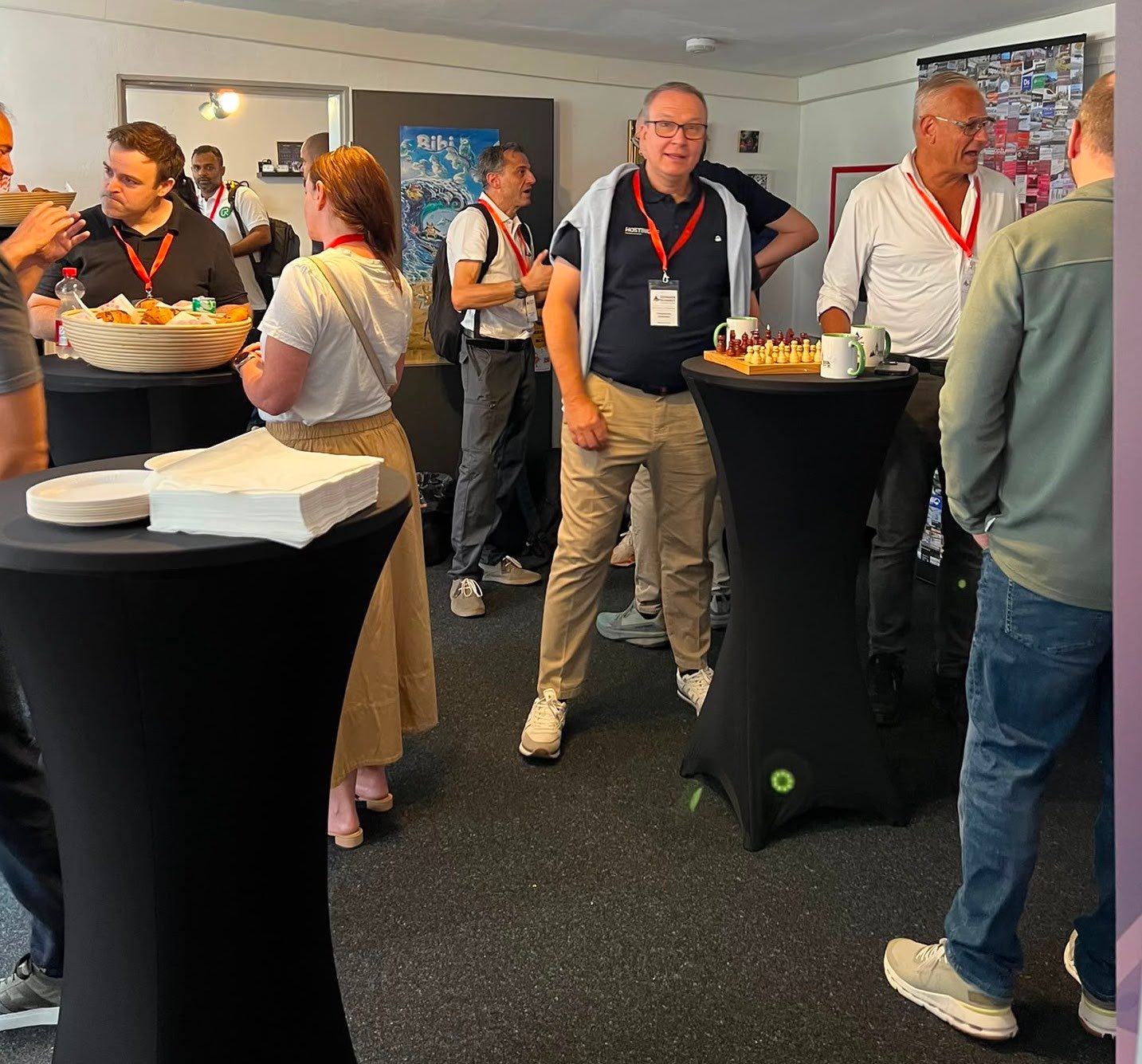
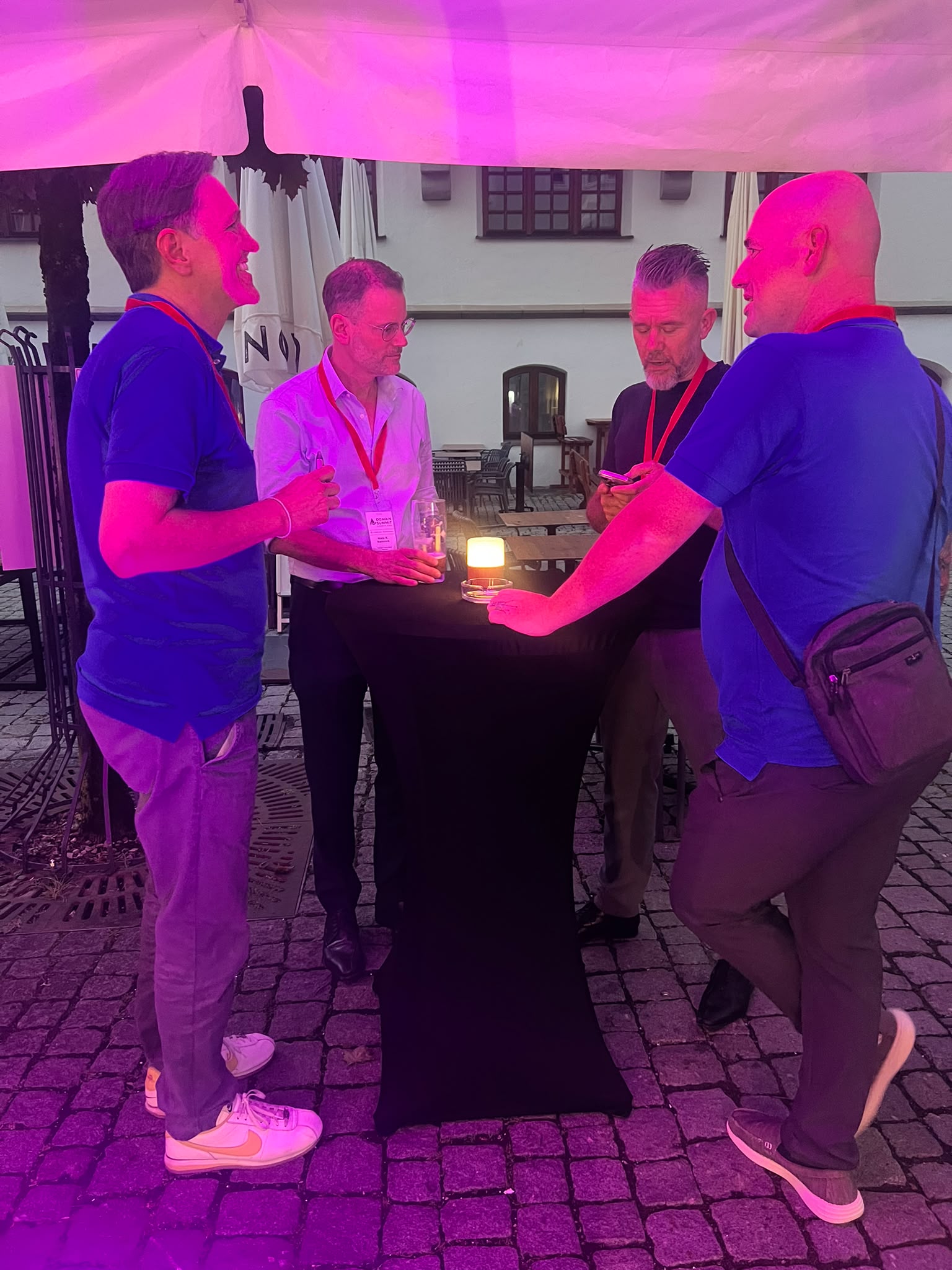
In the picture, clockwise: Matt Wilson (BrandForge), Niels R. Buntrock (BUNTROCKS Engineering), Thomas Medard (AiVikings.ai), Michiel Grotenhuis (BrandForge)
The real program lived in the margins: a pre-event group trip, networking dinners at local spots around the Rathausplatz, a brewery tour to close things out, and the steady stream of side conversations that a 60-person cap actually makes possible.
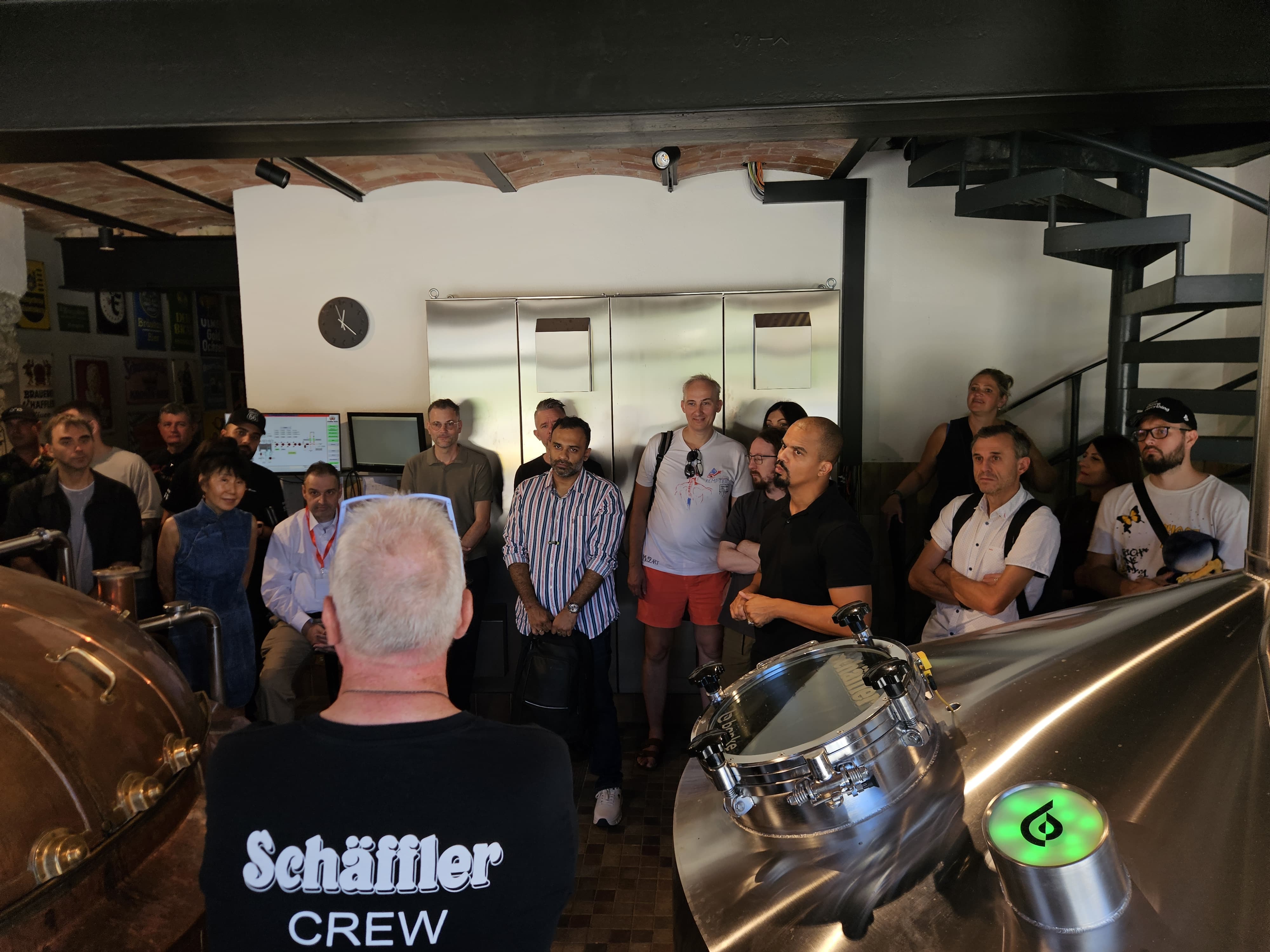
The main advantage of these smaller events for decision-making attendees is that you meet everyone, have time to get to know them and their plans, and remember names. You leave with introductions that mean something.
Conclusion
Someone described Domain Summit Europe as the spirit of the first Domain Summit in London but bigger in what mattered. I'd agree. And with the Domain Summit now rotating around the world (and with editions in Asia and Africa already having happened and a new one announced in Bangkok, Thailand for December 2026), the format feels like it's found its footing.
Huge credit to Helmuts Meskonis and the team for pulling it together.