
AI Visibility Tips from the Atlas Digital Summit Hosting Roundtable 2026
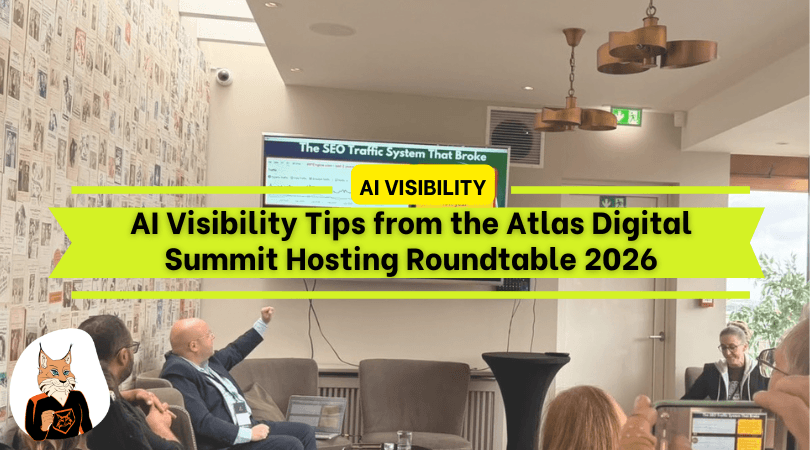
Here is a recap of the roundtable I co-hosted at Atlas Digital Summit [Website] with Carolyn Shelby [LinkedIn] and a sharp room of C-level executives in hosting, infrastructure, and cybersecurity.
I walked into the roundtable expecting people to be worried about where their organic search traffic went and to have to explain AI visibility to them. That wasn't the case: everyone in the room had already accepted that something fundamental has changed and understood how AI search works, so we spent one hour and 15 minutes on how to improve the chances of their businesses being cited, mentioned, and recommended.
The traffic problem is real, and it's structural.
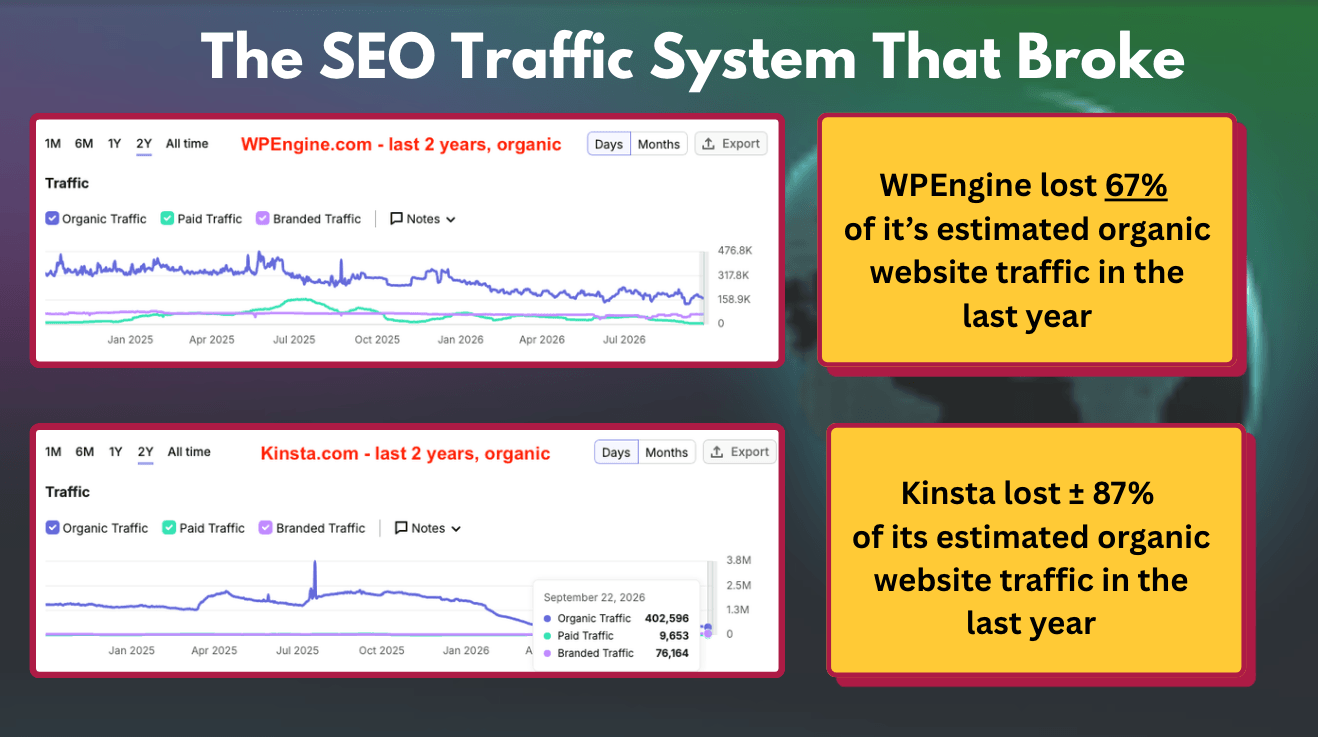
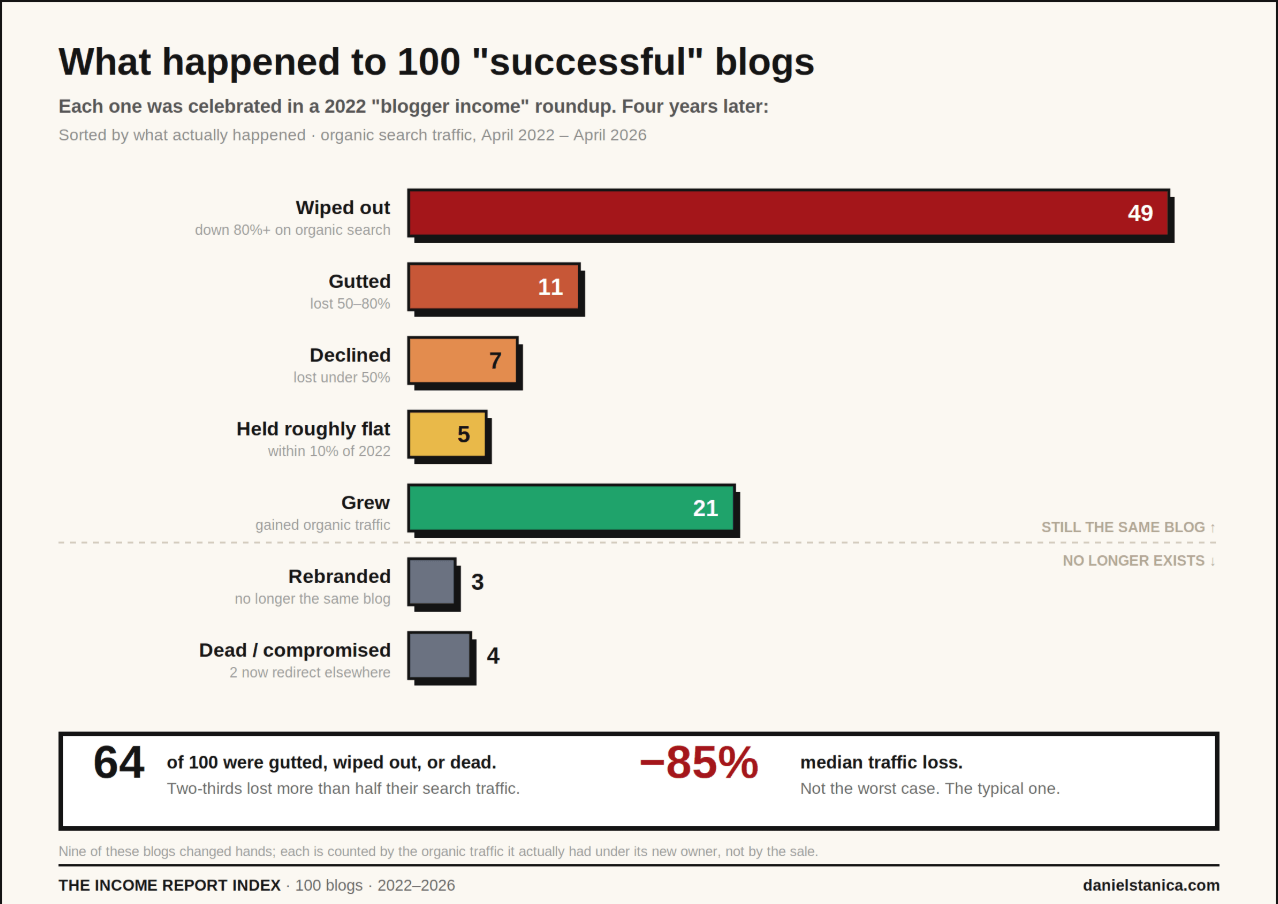
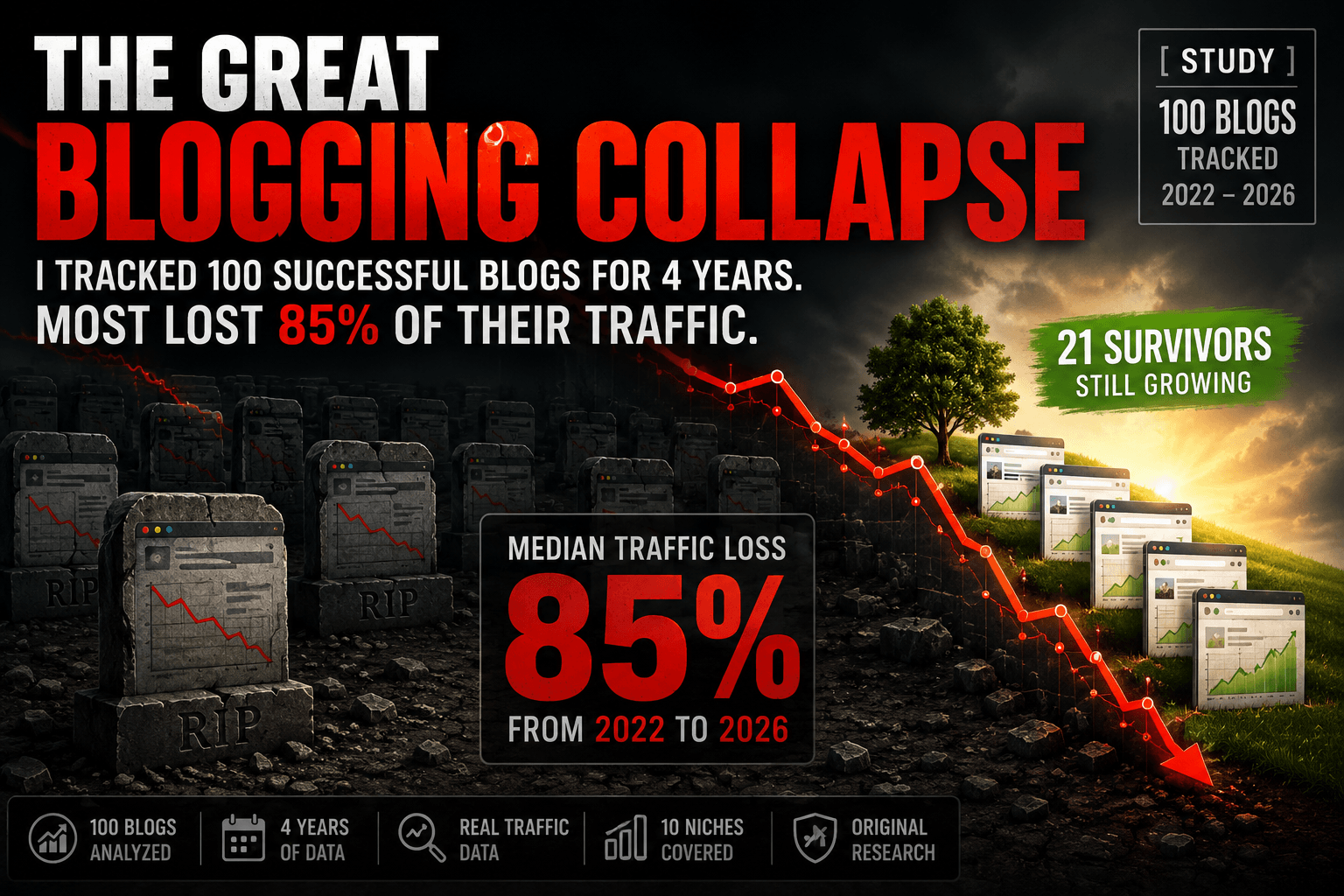
I opened the discussion with the numbers I keep seeing in AI Visibility audits and my study of 100 business blogs: organic search traffic is down 60-75% since 2022. In the hosting industry, Semrush estimates that brands like WP Engine and Kinsta have lost 77-85% of their organic traffic in the last year alone.
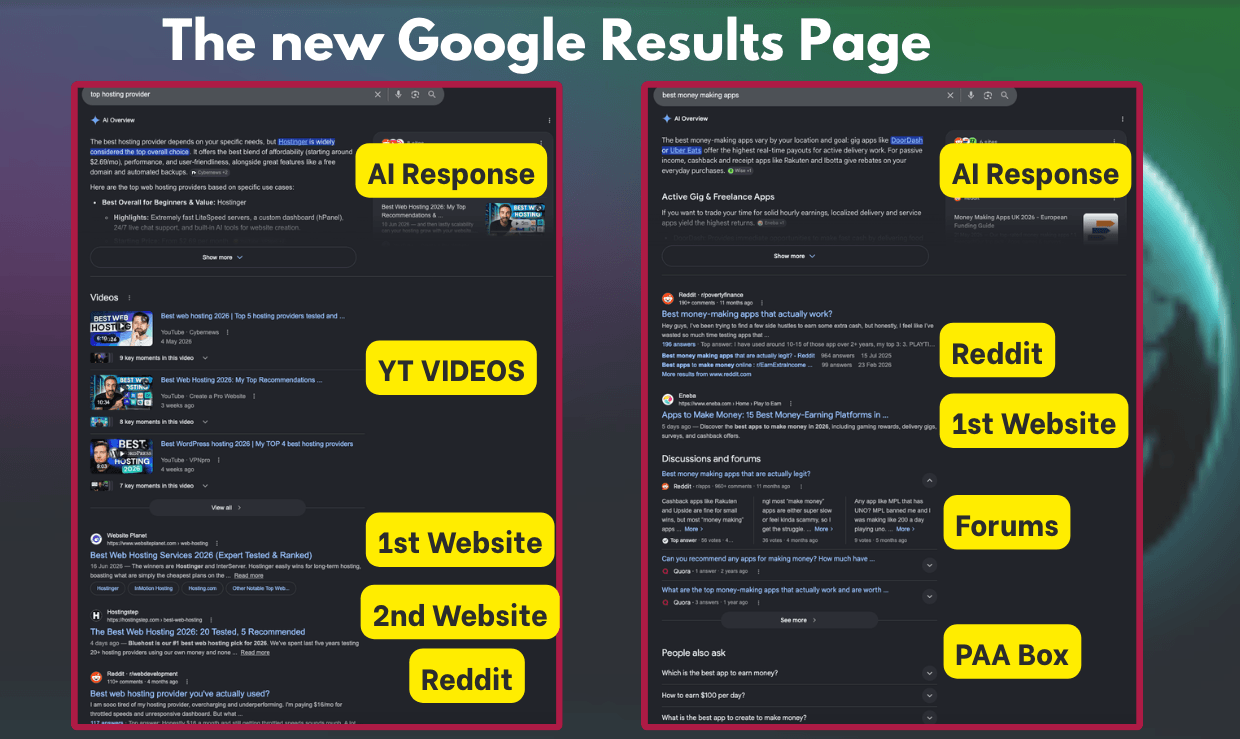
AI Overviews push traditional blue links people used to click to get information below the fold, and the remaining space goes to YouTube videos, Reddit threads, and forum discussions.
Carolyn noted that this didn't start with AI Overviews, and she traces the decline to Google's Helpful Content Update, which AI Overviews have since accelerated.
If your business model depends on ad-supported informational traffic, the outlook is dark. Transactional queries still send people to websites, and that is where e-commerce and service businesses hold up better than publishers.
One consequence we discussed is that ad-revenue-dependent sites are likely to be abandoned, which means hosting churn in the low-price tiers tied to those models. Small businesses, on the other hand, still need an owned web presence, so SMB-focused hosts remain relevant.
Your website is the source of truth.
Carolyn gave the most practical advice of the session. Here is the presentation slide where she explains how to make your content accessible and clear for AI systems.
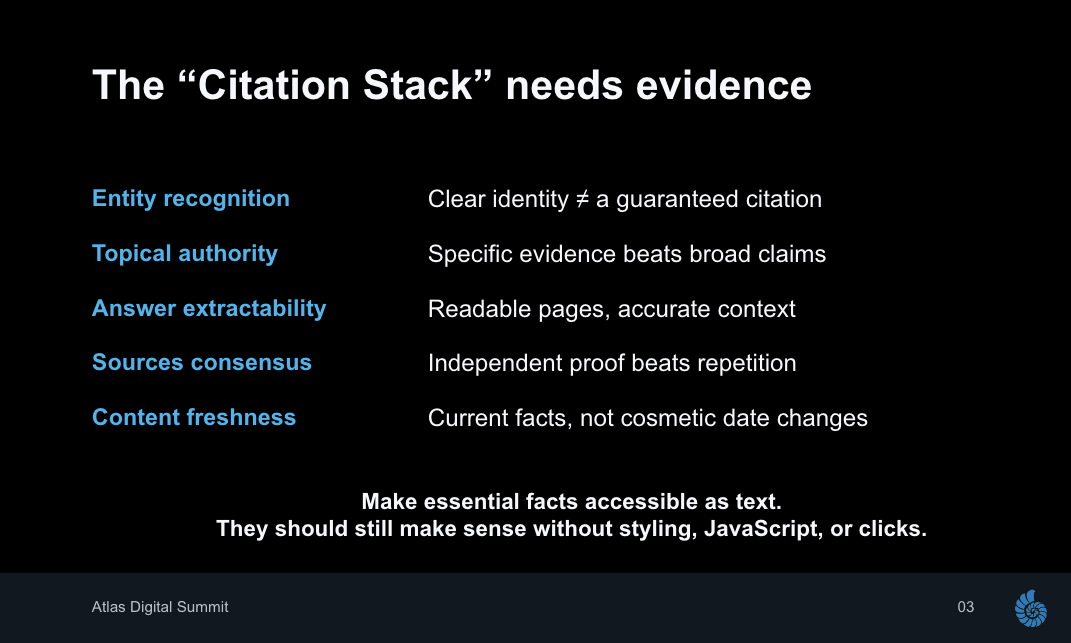
Treat your website as the authoritative source about your brand, and make it accessible and clear:
- Make essential facts accessible as text. Give them enough context to stay clear without styling, JavaScript, or clicks. Retrieval capabilities vary by platform, and schema is not a substitute for accessible content.
- Be specific and evidence-backed, as vague claims tend not to get cited.
- Say who you are. Name the brand explicitly in the headings, title, and inside content.
- Cover topics semantically. Models work with meaning, not exact-match phrases. Add bridge content that matches how people phrase conversational queries.
This is another reason I launched this personal website after 20 years in business without needing one.
Consistency and independent evidence matter.
Consistent identity and independent supporting evidence are useful areas to audit, but agreement across sources does not establish truth or guarantee an AI recommendation.
Carolyn's slide made the distinction that matters: independent proof is not the same as repetition. In practice, that means keeping your entity data consistent everywhere it lives (your own site, Wikidata, Wikipedia, LinkedIn, and third-party listings) and earning mentions from sources that stand apart from you.
Carolyn's brand-audit advice stuck with me. Find out what AI says about you, trace misinformation to its source, and fix it there. Move quickly, because contradictory data accumulates.
I shared a caution from my own tests: you can influence an AI's narrative briefly with fast positioning, but expect it to revert as more data accrues. There are no durable shortcuts.
Stop writing templated, self-serving listicles.
I said this bluntly: "Best X" lists that crown your own brand erode credibility. In the case studies I've looked at, they often end up boosting your competitors, because AI may prefer larger, corroborated entities that show up across comparison pages.
In the picture below, you can see how Google recommends BlueHost, but as a source it cites a page from InstaWP, which is a competitor. While we can not say for sure there's direct causation, a couple of studies show (here and here) a decline in self-promoting listicles.
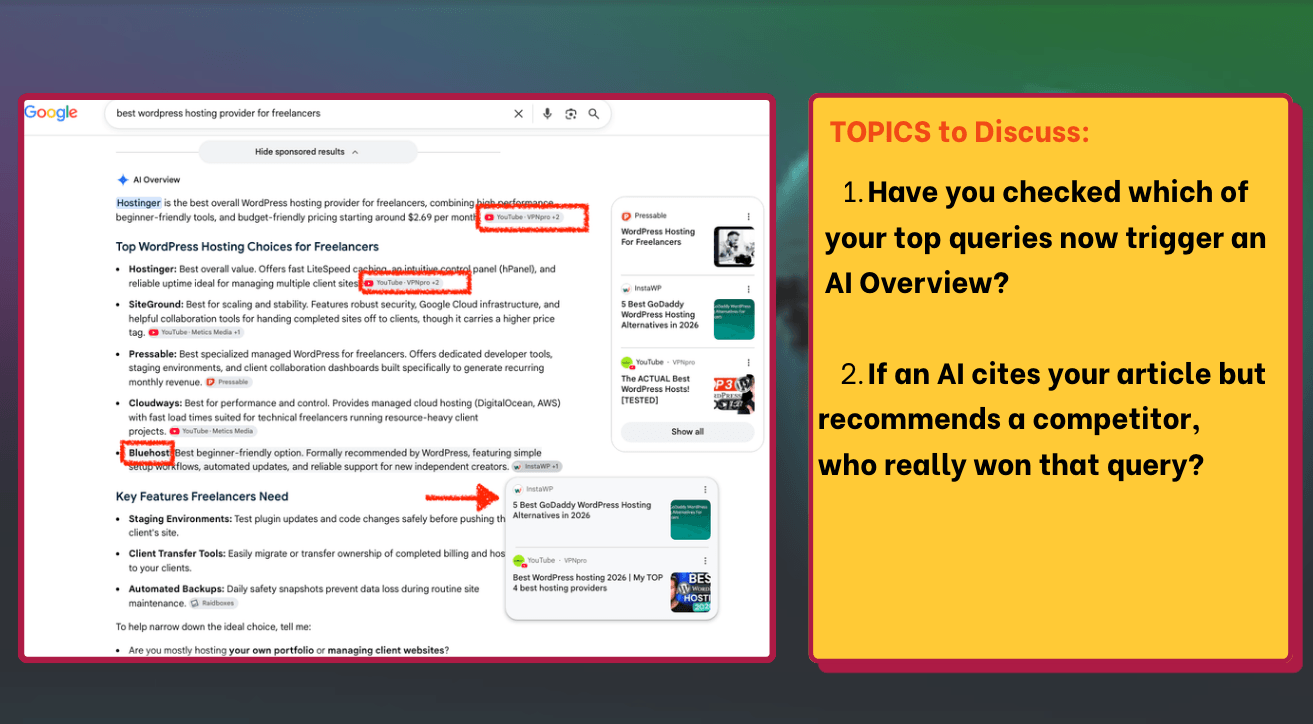
Carolyn's alternative is to build explicit comparison content that includes competitors. When someone asks a brand-inclusive question, subtlety won't cut it. Name the alternatives, say where you fit, and let the evidence do the work.
On YouTube and Reddit, lead with authenticity.
AI products frequently recommend videos, and authentic transcripts make that content easier to extract. Reddit matters too, but one participant pointed out an 86% drop in Reddit citations in ChatGPT, so it's volatile and a poor foundation to build on alone.
On tactics, we agreed that black-hat seeding is out, while authentic user-generated content from real users, affiliates, and clients is in. Carolyn suggested using agents to surface relevant threads and draft genuine comments, reporting abuse when you see it, and accepting that you can't control moderation.
Measure direction, not traffic
Traffic can no longer serve as a proxy for demand. The new measurement stack is directional:
- A repeated prompt panel in AI answers, sampled many times because outputs are probabilistic. It gives directional visibility within the sampled questions and platforms, not a measure of overall market share. Count mentions, citations, and recommendations separately.
- Correlation of direct and referral spikes with your content efforts
- Revenue, which matters more than traffic counts
One example I showed the audience was that when searching with AI tools like Claude, ChatGPT, or AI Mode, a brand recommendation often comes without a link to click, or with a link that doesn't go to the brand’s website.
A person who discovers a brand through AI may later visit by typing its URL, which can appear as direct traffic, or click through from a third-party page, which can appear as referral traffic if referrer information is retained. The original AI discovery may be invisible in analytics; direct and referral traffic alone do not establish that AI was the source.
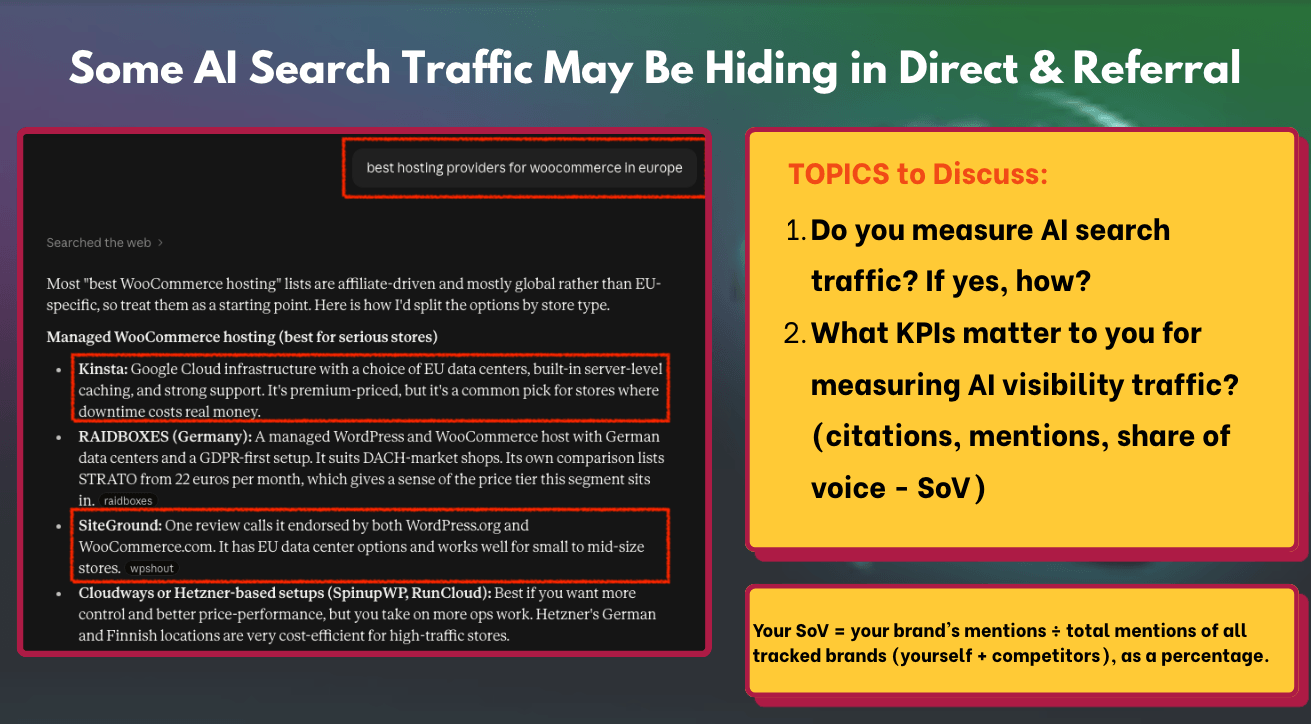
Carolyn compared it to pre-digital advertising, when you made decisions on imperfect signals. I agree. Citations can also be missing or misattributed, so treat any single reading with suspicion. To track non-branded prompts and analyze which sources get cited, she recommended prompt-tracking tools such as Serp Recon.
Another participant suggested a useful routine: build buyer personas (photographers, publishers, and so on), prompt AI as each persona, and use "explore" prompts to uncover the questions and motivations you'd otherwise miss.
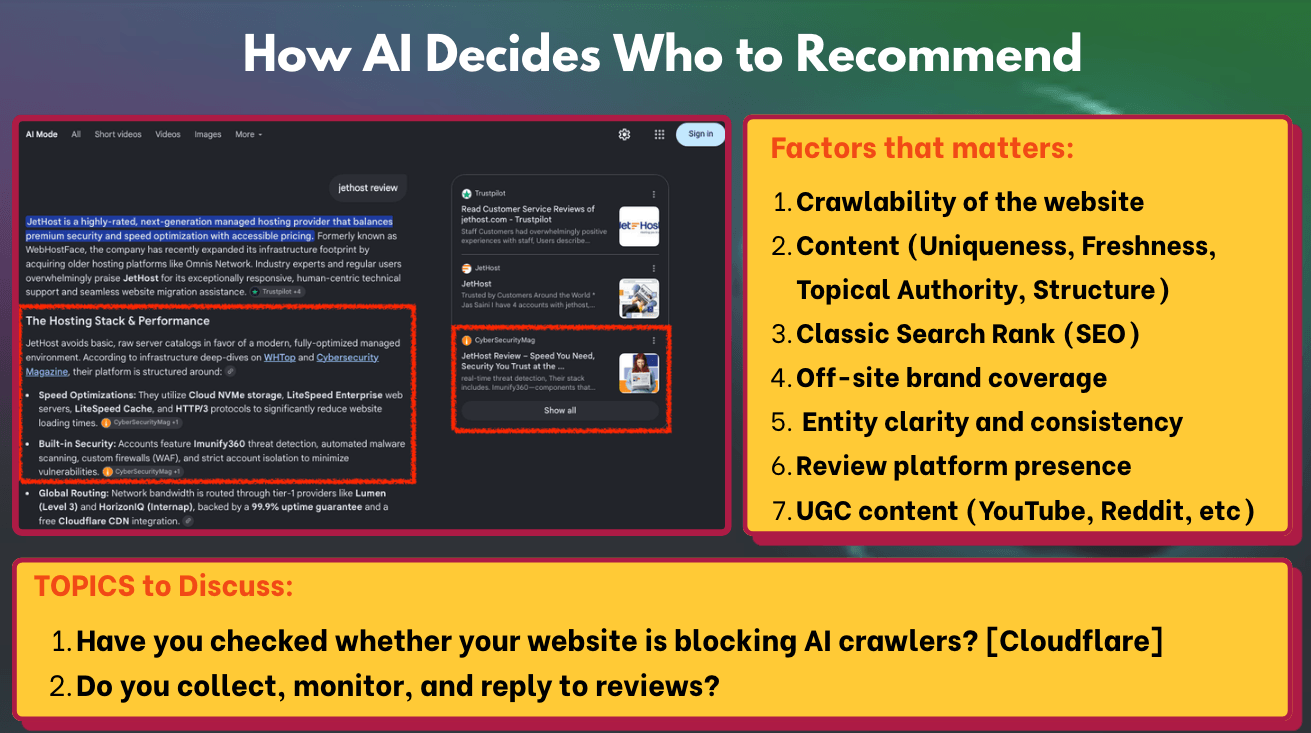
Buyer personas are something I recommend tremendously to mimic the way your potential clients search for your products and services and the prompts like “best WordPress hosting in Europe for photographers,” etc they are using to find them.
The publishing content question
Marius Lazarescu [LinkedIn] pushed us on something practical: how do you choose publishers for content when AI is the audience? He challenged the idea of sticking to niche sites and asked how to balance cost against quality across a long publisher list.
Carolyn's answer was to start with publishers already being cited in AI results, confirm their pages are accessible to bots, and then broaden to top-cited general sites to avoid niche saturation. She offered a two-pronged rule:
- New entities should prioritize quantity to build presence.
- Established entities should prioritize quality.
My addition: expand step by step, measure the effect on citations after each batch, and only then scale.
Things to do when back in the office
- Audit what AI says about your brand and trace errors to their source.
- Make essential facts accessible as text, clear without styling, JavaScript, or clicks. I use Screaming Frog for such audits.
- Replace self-serving listicles with honest comparison content.
- Align your entity data across Wikidata, LinkedIn, and major listings.
- Set up a repeated prompt panel and count mentions, citations, and recommendations separately.
- Expand third-party placements in measured steps.
Conclusion
Organic search isn't dead, but the job has changed from ranking pages to becoming an entity that is clear, consistent, and independently supported.
The best feedback I got after the roundtable was from someone who said he usually gets bored on sessions after 25-30 minutes; however, for this one, he was a little upset that it ended so fast after 1 hour and 15 minutes.
On Tuesday, October 6, 2026, Carolyn Shelby presents the online SMX session "Optimizing content for AI search and agents," with the agenda starting at 11:00 a.m. ET. Details here.
You can follow my research and work on AI Visibility for digital businesses on my advisory website at Competico.com.
Thanks to Carolyn, Marius, and everyone who joined the table.


No comments yet