
Adapted from an article in Romanian by Mircea Serdin, available in Romanian here. Facts rechecked and updated against primary reporting; the verification guide follows his structure.
On October 2, 2026, Google added a new paragraph to its "creating helpful, reliable, people-first content" guidance. It says that fabricating creator profiles, such as AI-generated headshots, made-up names, or false credentials meant to make content look written by human experts, is a form of deception.
Google adds that deception makes a page untrustworthy to users and its automated quality systems, and signals a low-quality page.

What may have triggered the change
The rule follows a Futurism investigation (September 17, 2026) into Brown Brothers Media (BBM) [Website], a company run by three brothers who are originally Australian and now live in Southeast Asia, that buys struggling publications with long-established domains and floods them with AI-generated articles.
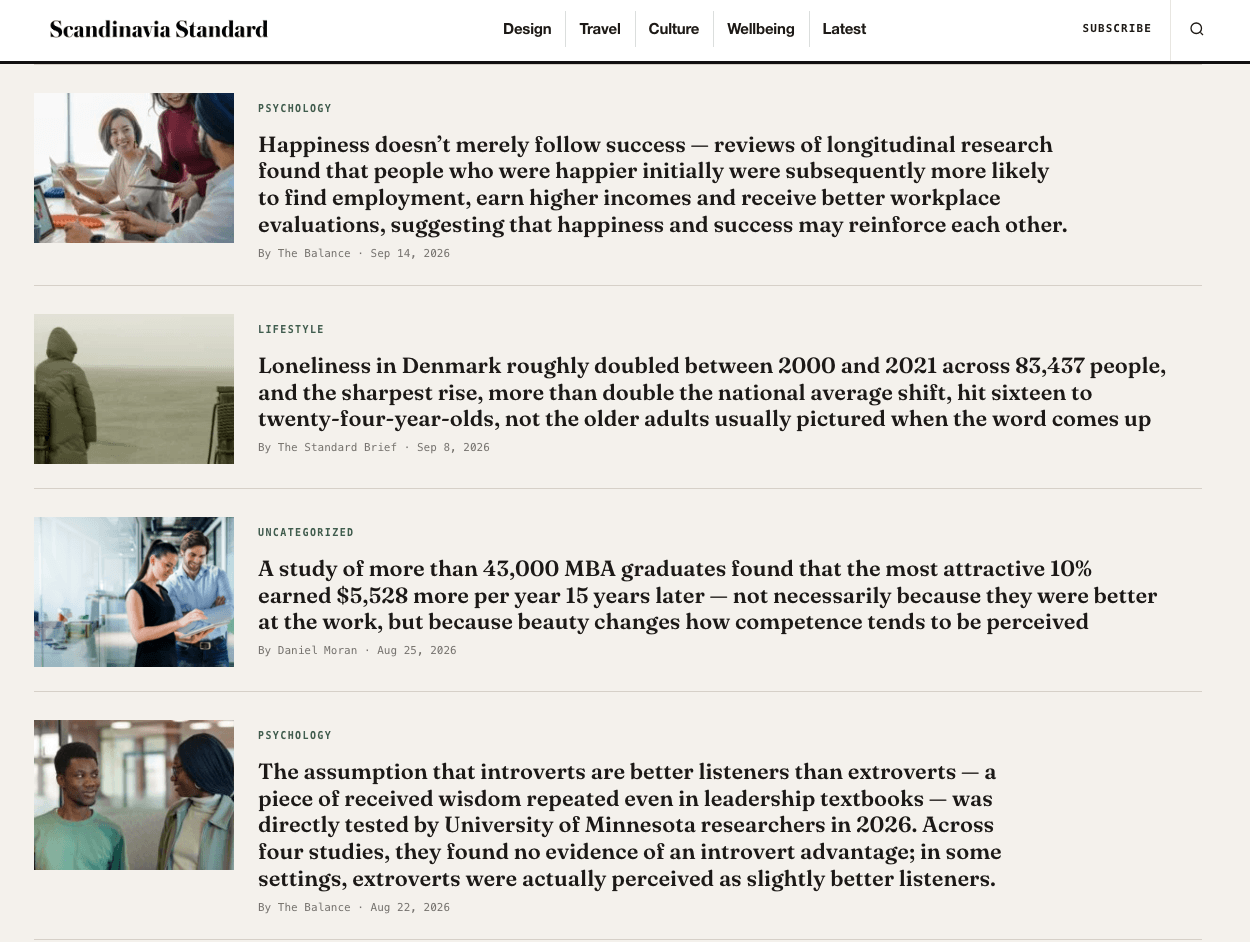
Below you can see examples of such titles:
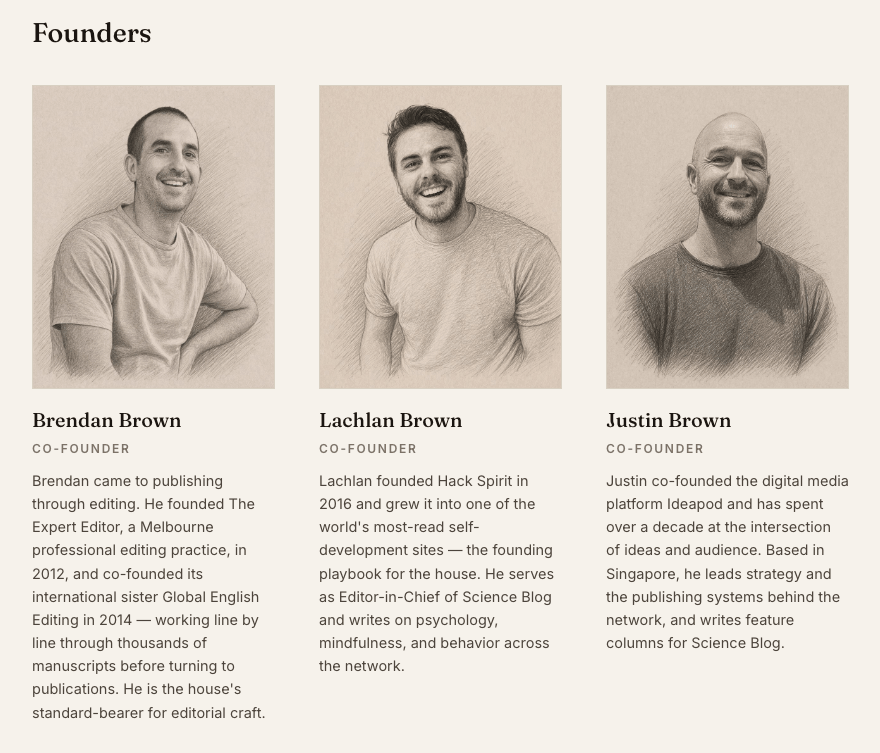
In the picture below, you can see the three brothers, who list themselves as Brown Brothers' founders on their website.
We can't say for certain that the investigation prompted Google's change, but publishing AI-generated content under invented AI editors was already well documented.
- Futurism found more than 50 invented author personas across BBM's sites, many with fake credentials. Examples: a "former NASA JPL systems engineer" on Space Daily and an "Irish psychologist" whose headshot was a stock photo.
- Some articles were plagiarized from real reporting. Others were emotional first-person essays about experiences that never happened, with continuity errors such as authors whose age changed from one piece to the next.
- BBM claimed 50+ million page views per month in a 2025 press release. That is the company's own figure. Similarweb estimates about 64.7 million visits per month, which would put the network ahead of NPR in a published ranking. Treat all of these as estimates, not audited numbers.
- After Futurism started asking questions in May, BBM deleted the fake profiles and thousands of articles. In a statement, it later admitted that its bylines "did not identify real people" and that some credentials were not real.
- After publication, Google appears to have suppressed BBM sites in Search and News, and the network halted publishing. Google has not commented on individual sites, and some BBM titles still show up in results, so "buried" is an overstatement.
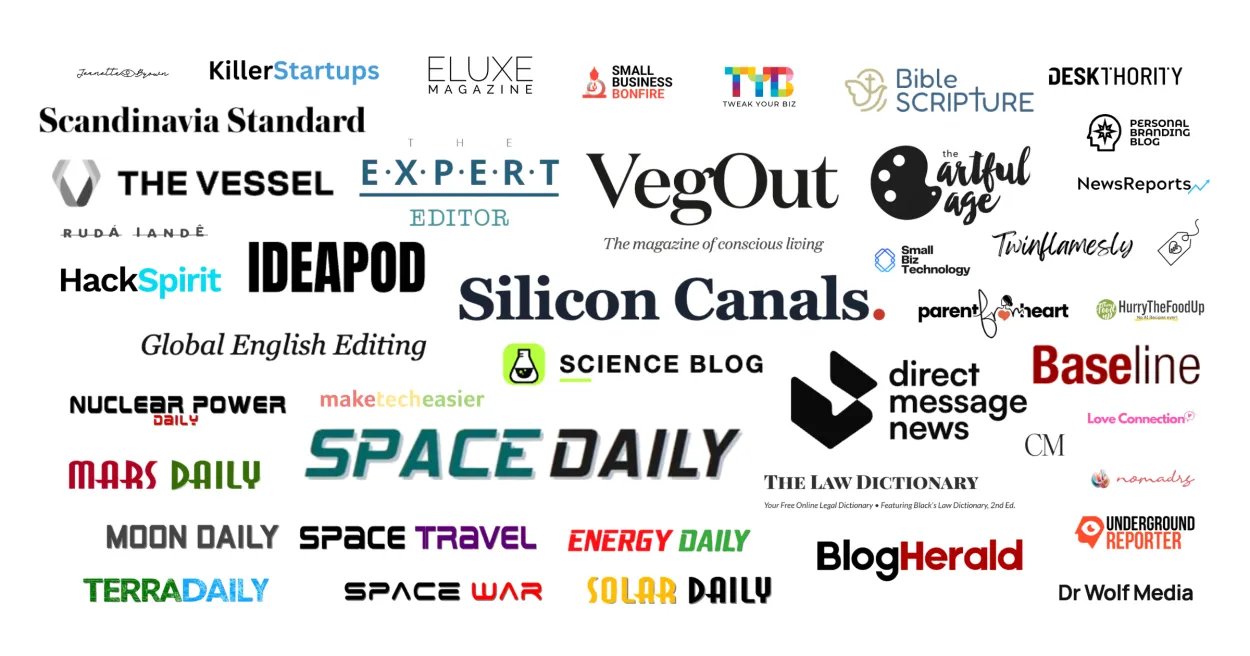
The same investigation shows that BBM owns more than 40 websites where they post such content. You can see these brands in the picture below. A couple of them you may already recognize in the digital marketing space: TweakYourBiz.com, KillerStartups.com, SmallBusinessBonfire.com,
However, BBM is not the only company doing this, as similar cases surfaced in Canada, Florida, and Rhode Island this year. Fake AI author networks are not new either. In 2020, a Daily Beast investigation found at least 19 fake personas, some with AI-generated headshots, that placed opinion pieces in dozens of outlets.
Google's new rule is welcome but late, and it only covers search. Much of this content now spreads through social media and encrypted messaging, where you have to do the checking yourself.
How to check a news site you don't know.
- Reverse-search the author's photo (Google Lens). If it appears only on that site, treat it as a red flag. A stock-photo match is a red flag, too.
- Look for the author elsewhere: LinkedIn, other outlets, interviews. Real journalists leave traces of their career.
- Count their output. Someone publishing 15+ articles a day on everything from satellites to parenting is almost certainly not one person. (Futurism counted one BBM byline on 85 articles in a single week.)
- Read "About" and "Contact." A real publication has a legal entity, an address, and a named editor-in-chief. A lone Gmail address is a warning sign.
- Check who owns the domain. For .ro domains, use the RoTLD WHOIS. Company owners are often visible, while individuals' data is usually restricted under GDPR. Hidden data alone proves nothing, so combine this with the other checks.
- Check the site's history on Archive.org. A recipe site that suddenly publishes politics, or a 50x jump in output, usually means a new owner.
- Click the sources. Serious articles link to documents, studies, and original statements. Fabricated ones link nowhere, or only to sister sites.
- Look for chatbot leftovers, like "Here is an article about..." or "As a language model...". Futurism found a BBM piece that began with the chatbot's own working notes.
- If it came via a Facebook page, open Page Transparency (page age, name changes, admin countries) and check Meta's Ad Library to see whether the page pays to reach you.
- The angrier a headline makes you, the more it deserves a check, as authors most probably try to exploit your anger.
- Use LLMs like Claude, ChatGPT, Grok, or Gemini to fact-check the article
Conclusion
Fake bylines don't stop at Google's door as the same content spreads through social feeds and messaging apps, where no quality system checks who wrote what.
Brown Brothers Media didn't win because its content was good. It won because a name, a photo, and a bio were enough to pass as expertise for readers and algorithms alike. It stopped only when journalists started asking questions.
Fake authors are now free to produce, so verification falls to you. Before you share a story from a site you don't know, run the checks above. And if you publish, put real, verifiable people behind your work. A human who can be found, checked, and held accountable is becoming the one trust signal that's still hard to fake.
Credit for the original article and the verification guide goes to Mircea Serdin, while the comments and the conclusion are mine.
Sources:


No comments yet