WordCamp Europe 2026 is now behind us, and after two intense days of back-to-back meetings, multiple conversations, and a flight home, here is my recap.
TLDR
WordCamp Europe 2026 in Kraków drew 2,458 attendees which is a proof that Basel was a blip, not a trend. I skipped every session, took 25 meetings in two days, and came home with one clear signal: AI is no longer a WordPress side topic, it is the business conversation. The community is healthy. The business model built around it is under real pressure for the first time.
I went to Kraków with a clear agenda: not to attend sessions or collect swag, but to meet people: partners, collaborators, and anyone working at the intersection of WordPress Business and AI Visibility.
Here is what I found.
Attendance: The WordPress Community Is Still Strong
According to the official recap, WCEU 2026 drew 2,458 attendees from 81 countries to the ICE Kraków Congress Center. Let’s put that in context:
- Athens 2023 — 2,545 attendees
- Torino 2024 — 2,584 attendees
- Basel 2025 — 1,723 attendees
- Kraków 2026 — 2,458 attendees
Basel looked like a worrying cliff at the time. Kraków tells a different story. In my view, Basel wasn't a sign of declining interest in WordPress, but a logistical problem. Visa procedures for non-EU attendees, unusually high accommodation costs, and Switzerland's overall cost of living kept a significant portion of the community away.
Kraków removed those barriers almost entirely, and people showed up. Also, nearly a quarter of attendees in 2026 were attending their first WordCamp Europe. WordPress isn't a community in decline, but one still finding new people.
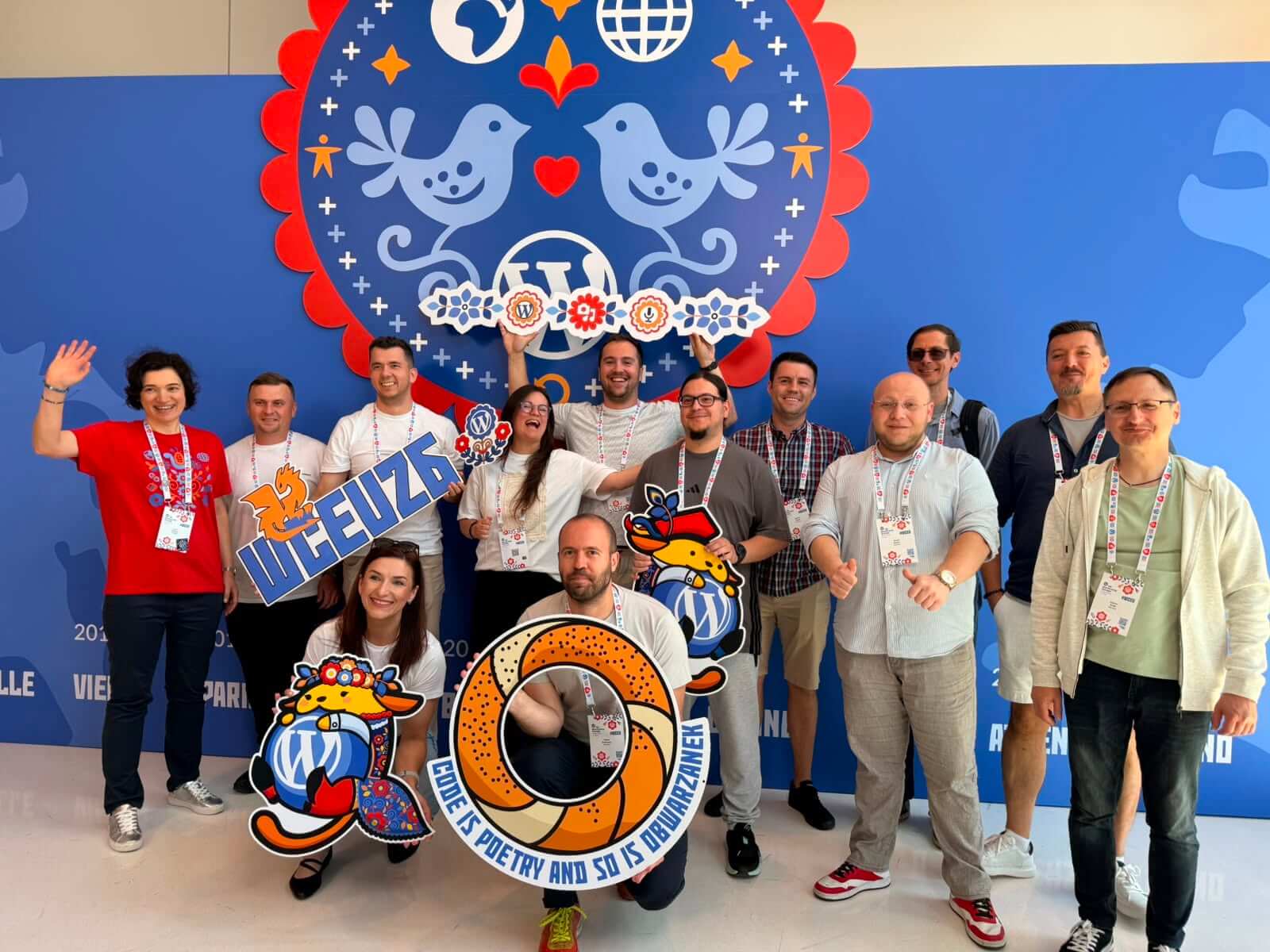
Sponsors and Exhibitors: WordPress Pulls Bigger Tables Now
The expected names were there. I mean companies for whom WordPress is a core business, showing up to stay visible in front of their market. But what surprised me was the presence of companies where WordPress is a relatively small slice of revenue, yet they still chose to put resources into WCEU:
- Salesforce — a main sponsor, though I could not locate their booth on the floor, which raises its own question: why invest at that level without a physical presence?
- Google — presenting their latest AI tools and, notably, AI Search
- PayPal — promoting their WooCommerce integration
- Pantheon — hosting and infrastructure
- CloudLinux and Imunify — security infrastructure
- StickLight — a new AI-powered app creation platform
- BlackWall — an AI-driven cybersecurity platform
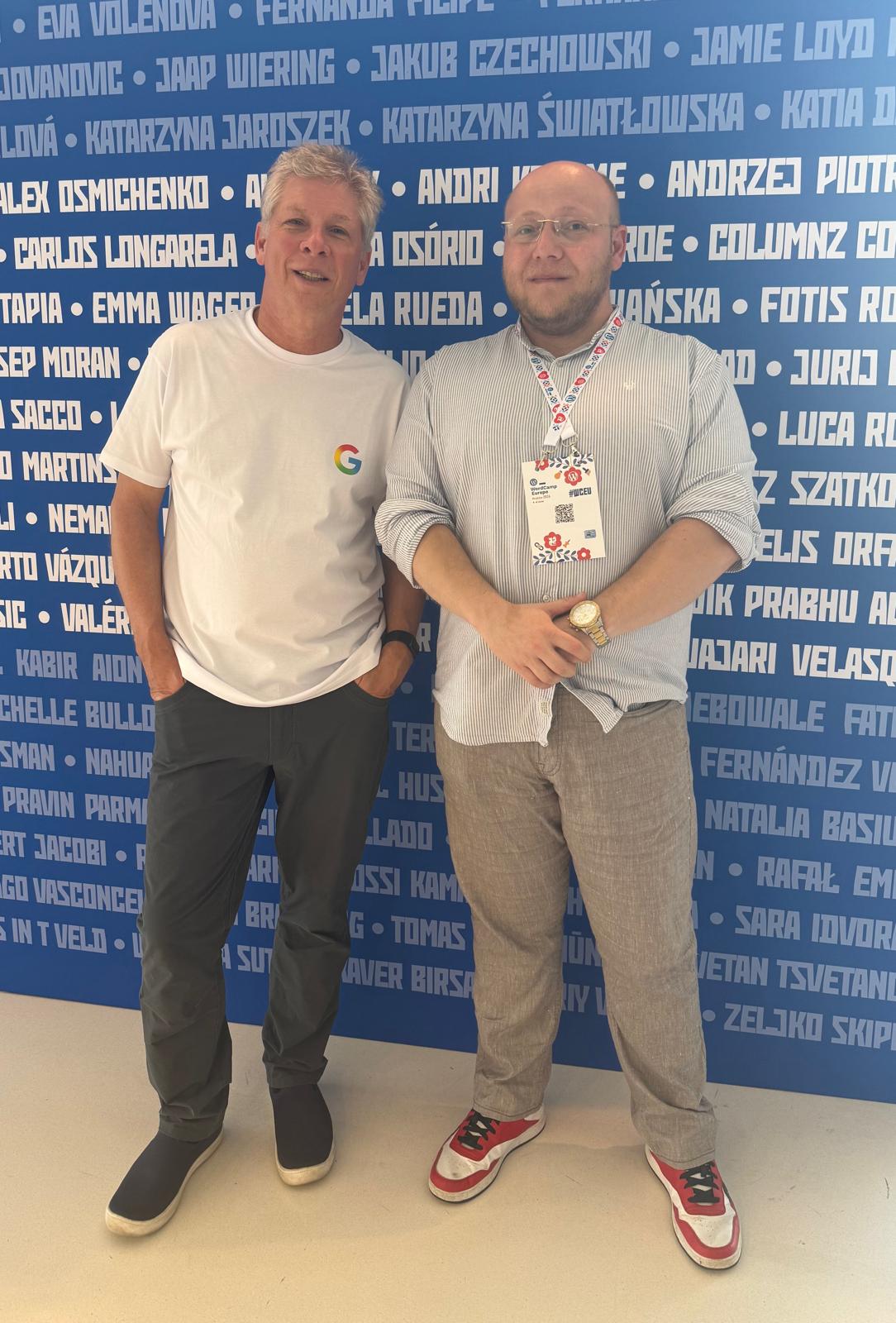
I had good conversations with teams from Elementor, Google, SiteGround, Kinsta, PatchStack, CloudLinux, JetHost, Kirki, MelaPress, TranslatePress, BrandForge, WPX.net, WPBakery, WPExperts, ChemiCloud, and BlackWall. The Google conversation was particularly relevant to what I am building at Competico, but more on that in separate posts.
Networking: 25 Meetings in Two Days
This was my primary objective, and by that measure, Kraków delivered.
I pre-planned every meeting using the public attendee list and scheduled them via LinkedIn, Calendly, and email before the event opened. Over two conference days, I completed 25 meetings, missing only one, which was my fault entirely, having let a conversation run long enough to blow past the next slot, and the other person could not reschedule on the day.
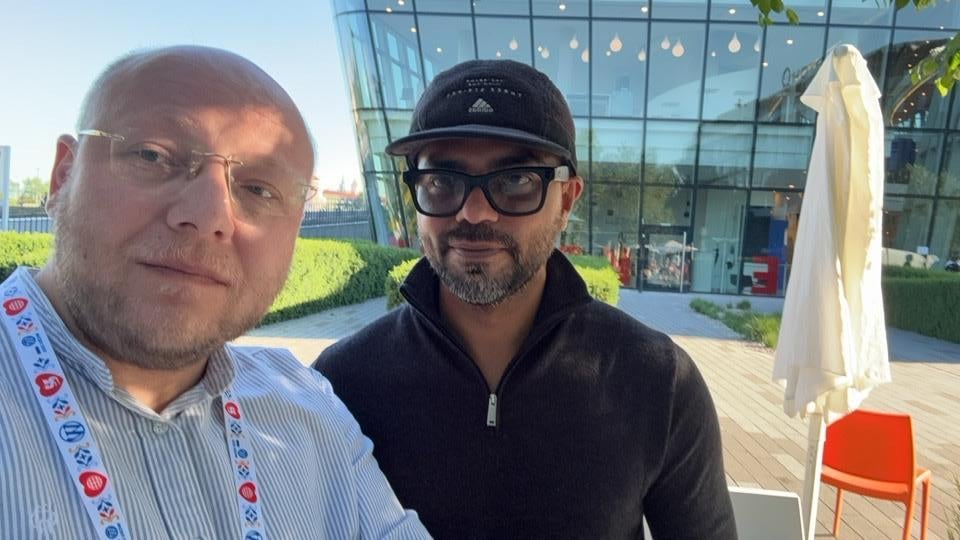
The venue helped: ICE Kraków had private tables on every floor plus outdoor seating in front of the center, so you could always find a corner for a real conversation rather than shouting over ambient noise. That matters more than people realize when you are trying to have a substantive business discussion at a conference.
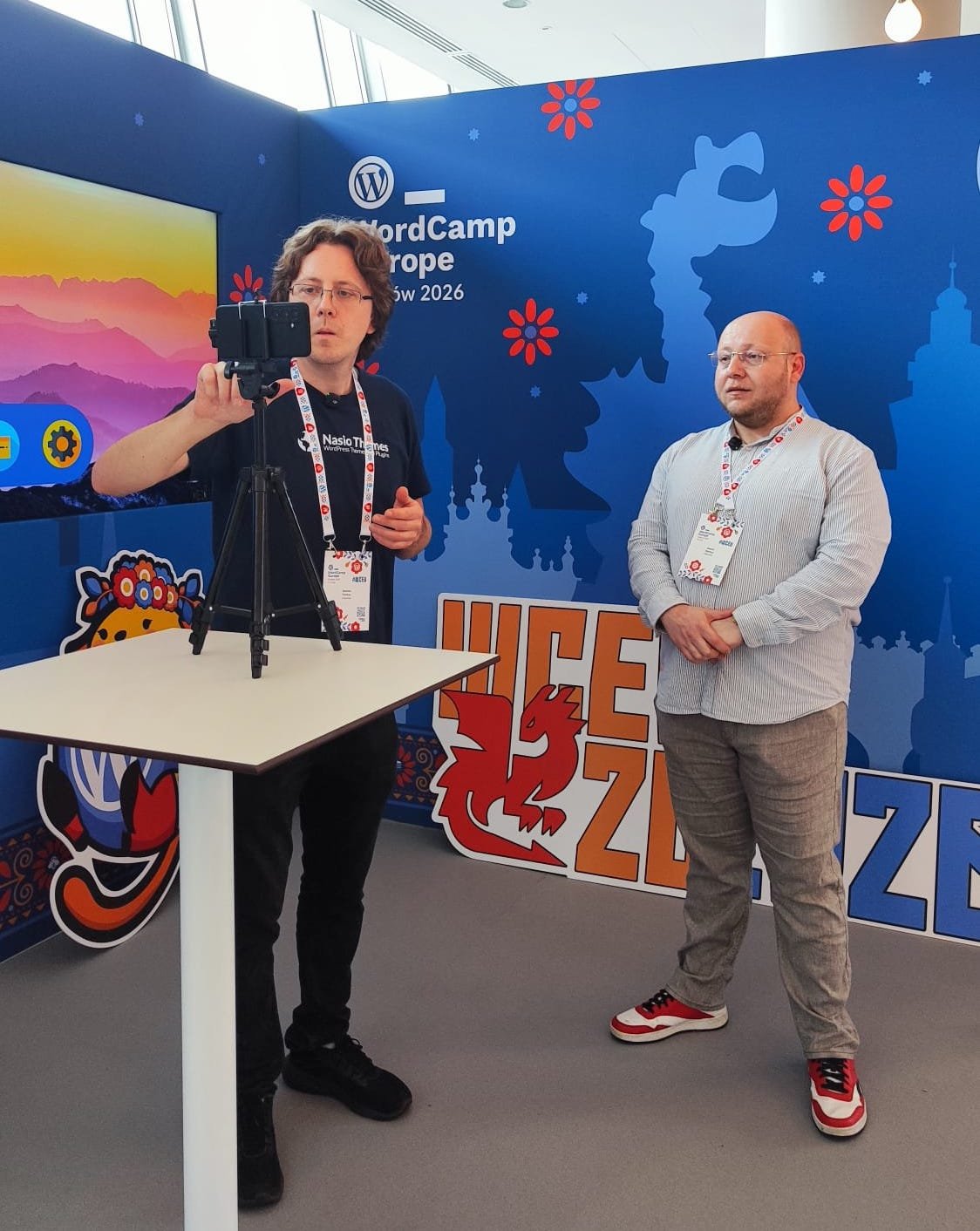
Unfortunately, even though there are so many WordCamps every year, there is no official event app for updates and scheduling meetings. Coordinating 25 meetings across three different platforms works, but an integrated tool would have made it smoother for everyone. For future editions, that feels like a meaningful opportunity to organize.
Sessions: I Skipped Them (Deliberately)
I attended zero sessions during the main conference days, and that was a conscious choice. WCEU 2026 records every session and makes it available on WordPress.tv. I can watch the ones that matter to me at home, at my own pace, without sacrificing meeting time.
If you are attending future editions primarily to learn the content, the recordings are comprehensive. If you are attending for relationships, protect your calendar accordingly.
Side Events: Elementor Day Was Worth It
There were many side events and dinners across the week, a good number listed publicly on the WCEU site. I chose one: Elementor Day on June 3, the day before Contributor Day.
It was well-organized and offered genuine insight into where Elementor is heading, in particular, their thinking on AI and website building.
For anyone attending future WCEU editions, I would suggest two things:
- Check the official side event calendar early and register before spots fill up
- Reach out directly to the companies you work with to ask whether they are running any private sessions. Several of the best gatherings never make it onto the public list.
Organization: Genuinely Impressive and Entirely Volunteer-Run
The WCEU 2026 organizing team, none of whom I know personally, did an exceptional job. Coffee, snacks, water, juice, and food were available on every floor throughout both days, with almost no queuing. That sounds small until you have been to events where attendees pay ten to fifteen times the ticket price and still queue for fifteen minutes for a lukewarm coffee, or, outside, in the food corner, where a boring burger costs 3-4 times the usual price. At €50 a ticket, the operational quality here was remarkable.
Volunteers were positioned throughout the venue, approachable and genuinely helpful. The layout supported both large-group movement and private conversation without one disrupting the other.
What makes this more impressive is that the WordCamp organization is entirely volunteer-based. Putting together an event for 2,500 people requires a huge amount of planning, scheduling, and coordination, which translates to months of work by people doing it on top of their regular jobs, for free.
I co-organized WordCamp Romania 2024. A much smaller event by any measure, but it still consumed most of my energy in the months leading up to it. That experience gives me a real appreciation for what the Kraków team pulled off.
Also, it fuels an opinion I hold firmly: WordCamp organizing teams should be remunerated in some form. The community benefits enormously from their work, and "thank you", however sincere, does not scale as a compensation model.
The Bigger Picture
If I had to distill the mood of WCEU 2026 into one observation, it is this: AI has stopped being a conference theme and started being a business reality.
It was not coming up as a trend to discuss or a future to prepare for. Still, it was coming up in nearly every conversation as something people are already deploying, already selling, already integrating into products. The question has shifted from "should we?" to "how do we do this well?"
AI Search Visibility, in particular, came up repeatedly, not just among publishers worried about traffic, but among product companies and agencies thinking seriously about how they generate leads and drive sales, as traditional search behavior has shifted. Kraków was the clearest signal yet that this conversation has reached mainstream thinking in the WordPress business.
That said, one topic kept coming up in private conversations: many agencies, plugin creators, and infrastructure providers are worried about a recent drop in sales. Nobody had a single clean answer, and I do not think there is one.
My read is that a combination of factors is hitting at once: broader economic uncertainty, developers vibe-coding their way to bespoke solutions with AI instead of paying for plugins and themes, and an industry shift where having a website is no longer the unquestioned first step for every business. Any one of those would be manageable. All three at once is a structural pressure the WordPress economy has not faced before, and Málaga 2027 will be a telling moment for how the community has adapted.
See you there, but before that, I’d love to read your opinions in the comments section.
Here are a couple more recaps and highlights of WCEU 2026:
- https://wordpress.org/news/2026/06/wceu-2026-recap/
- https://callmelana.com/how-was-my-wordcamp-europe-2026-in-krakow/
- https://www.codersjungle.com/2026/06/06/what-happened-at-wordcamp-europe-2026/
- https://www.linkedin.com/pulse/wordcamp-europe-2026-learnings-from-krakow-ernst-jan-bach--1l6me/
- https://techiefied.com/wordcamp-europe-2026-contributor-day/
If you wrote one, let me know so I can add yours too.