
So you do SEO for your clients, or you are offering SEO services as part of a broader marketing strategy. I think that now is the right moment to ask yourself a quite difficult question: how do you actually help your customers?
If your answer is "I get their business keywords to the top of Google search results," I think there's a high chance you'll be out of business within the next few years. Sorry to deliver bad news, but it’s better to know sooner than later.
TL;DR
1. Kodak owned photography but died defending film. BlackBerry owned the mobile market but died defending keyboards. Is your SEO agency defending Google rankings while search evolves around it?
2. AI agents, LLMs, and AI search don't care about SERP position. They care whether they can find you, verify you, parse your data, and trust your brand. These are completely different signals.
3. If your competitive advantage is "I rank keywords," you're commoditized. You have a max 2-year window to shift before the market forces you to.
Let me explain with three case studies that illustrate exactly this pattern.
Kodak: Preserving Memories, Not Selling Film
Kodak was the Google of its day. Founded in 1880, the company owned photography both literally and culturally. By 1976, Kodak controlled 90% of the film market and 85% of the camera market in America.
Then digital photography arrived, invented by...Kodak.
In 1975, Kodak engineer Steve Sasson created the first digital camera. The company even had over 1,000 patents related to digital imaging. Yet Kodak's management dismissed the innovation with a now-infamous quote: "That's cute, but don't tell anyone about it."
Why? Because Kodak had misidentified what business it was actually in.
Kodak believed it was in the business of selling print photos and film. So when digital threatened that revenue stream, the company chose denial.
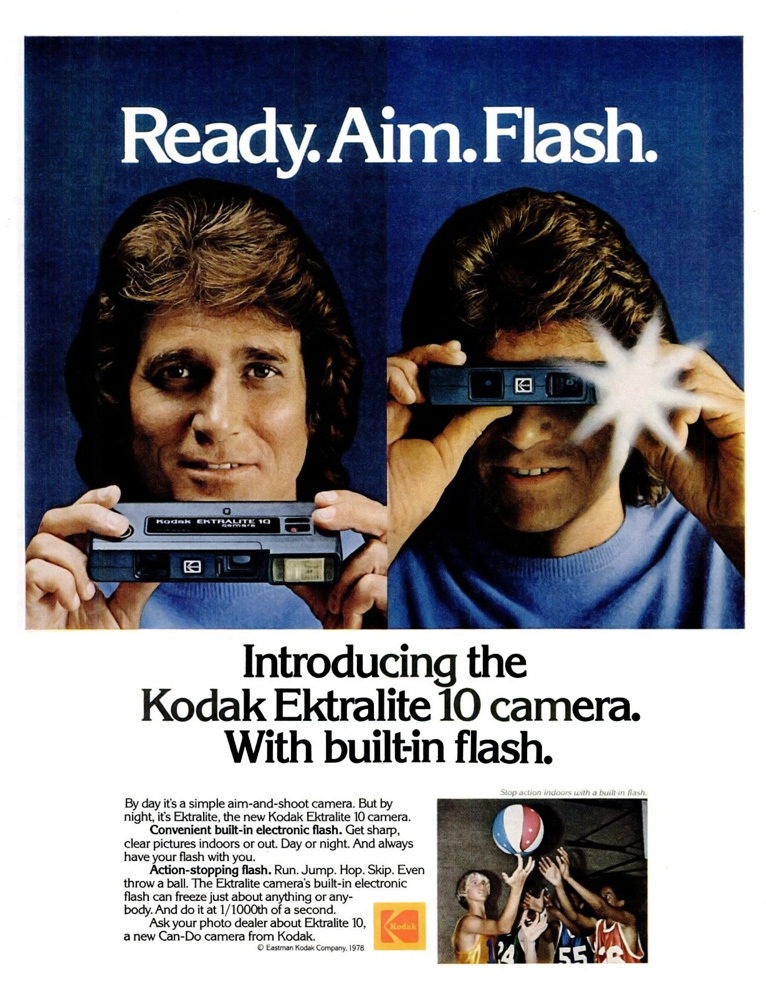
It held 90% market share. How could it lose?
But the real business, the actual customer need Kodak solved was preserving memories. Digital did that better and cheaper.
Kodak could have owned digital photography. Instead, it chose to defend its legacy product.
By the late 1990s, Kodak faced increasing competition from companies like Fujifilm and digital camera manufacturers. Its revenues began to decline sharply.
By 2012, Kodak filed for bankruptcy. A $30 billion company evaporated because the management optimized for the wrong metric. While Kodak continues to exist as a smaller entity focused on printing and imaging solutions, it is far from its former glory.
BlackBerry: Enterprise Communication, Not Keyboards
BlackBerry was the standard for mobile email. Founded as RIM in 1984, the company pioneered mobile communication for professionals. Its physical QWERTY keyboard became a status symbol for executives and a tool beloved by anyone who sent hundreds of emails daily.
Then the touchscreen arrived, and BlackBerry made a fatal strategic error: it optimized for the wrong thing.
BlackBerry built its devices and infrastructure around low bandwidth consumption. This made sense when carriers were selling minutes, as the network capacity was scarce. The company built lean, efficient devices that worked on older networks in emerging markets. That was smart in 2005, but it became a prison by 2010.
When Apple introduced the iPhone in 2007, BlackBerry executives initially dismissed it. The touchscreen seemed fragile and inefficient. BlackBerry remained confident in its keyboard design, convinced business professionals would never abandon the tactile feedback.
The company tried to compete with the BlackBerry Storm (2008), a full-touchscreen device that was, by most accounts, catastrophically bad. It had clunky mechanical feedback rather than a responsive one, software riddled with bugs, and an overall user experience that felt like a compromise rather than an innovation.
Below is my last BlackBerry phone: a really nice BlackBerry Passport that ran BlackBerry OS 10 and could run Android apps in a virtual machine. In addition to their official app store (BlackBerry World), users can access the Amazon Apps. But it was too little, too late, as the world had already moved to touch phones and the Android and iOS ecosystems, which had more apps.

BlackBerry's real business wasn't making keyboards. It was enabling modern communication. But the company had optimized so deeply for the keyboard and for the low-bandwidth world that it couldn't pivot when the world changed. By the time management understood what was happening, Apple and Android had captured the market.
BlackBerry's smartphone market share collapsed from peak dominance to 3% by 2013.
Apple & AT&T: Data, Not Minutes
Apple's insight was different. When Steve Jobs negotiated with AT&T to launch the iPhone, he understood something carriers didn't yet see: the real future revenue wasn't in selling minutes.
As one character in the 2023 BlackBerry film puts it, "There's only one minute in a minute," which means the supply is capped while data consumption can grow indefinitely, as a customer can use more data each month. Minutes will always be, well, minutes.
Apple offered iPhone users unlimited data on their plans. This was radical. AT&T had been selling minutes and charging overages. Apple reframed the market to show carriers that data consumption was the real growth engine.

Carriers realized that if customers are video calling, streaming, and browsing constantly, they'll generate far more revenue than customers on a 900-minute voice plan. Apple made carriers profitable in an entirely different way.
What This Means for Your SEO Business
Here's the uncomfortable truth: if your SEO value proposition is "I'll get your keywords to rank in Google," you're in the same position as Kodak and BlackBerry.
The real customer problem you should solve isn't Google rankings but making their business visible and discoverable when people (and increasingly, AI agents) are looking for solutions.
Google rankings are becoming a feature, not the business.
Why? Because search itself is changing:
- AI Agents: Soon, customers won't search for "best managed WordPress hosting provider." They'll tell an AI agent to "find me reliable managed WordPress hosting for my medium site that offers 24/7 support and has positive verifiable reviews from clients," and the agent will evaluate options based on verification, reviews, brand signals, and trust metrics, not only the SERP.
- LLM Discovery: ChatGPT, Claude, and other language models are already the first place many people go to ask questions. They cite sources from training data, not only from current Google rankings. Your visibility there depends on various signals, such as authority, verification, and trustworthiness, in the training data.
- Voice and Conversational Search: "Show me the top result" is being replaced with "What's the best option?" in which an AI must synthesize information from multiple sources and make a judgment.
As you can see in the screenshots below, AI Search systems not only use the information they have been trained on but also perform multiple live searches and retrieve information from websites without you having to visit any of them.
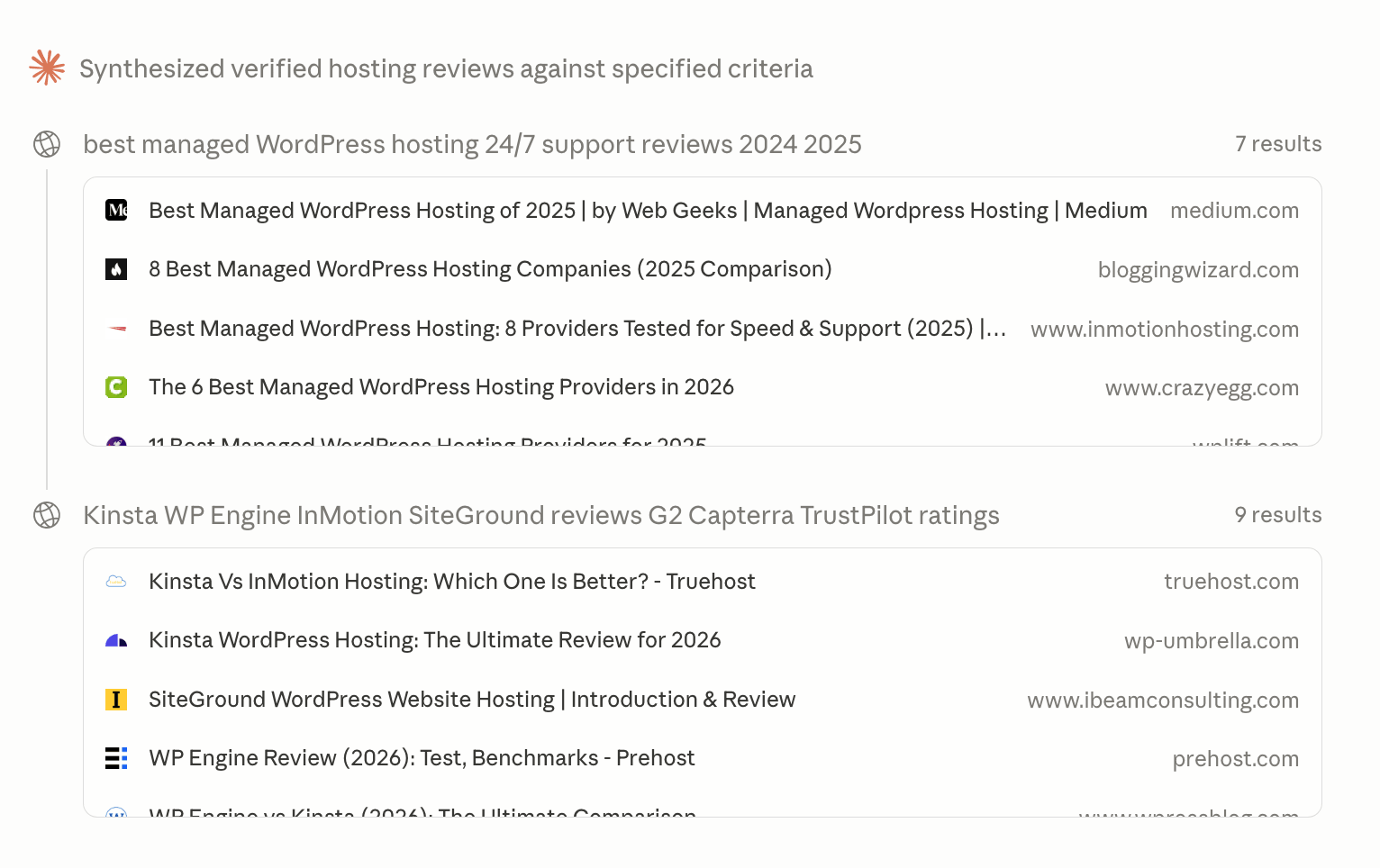
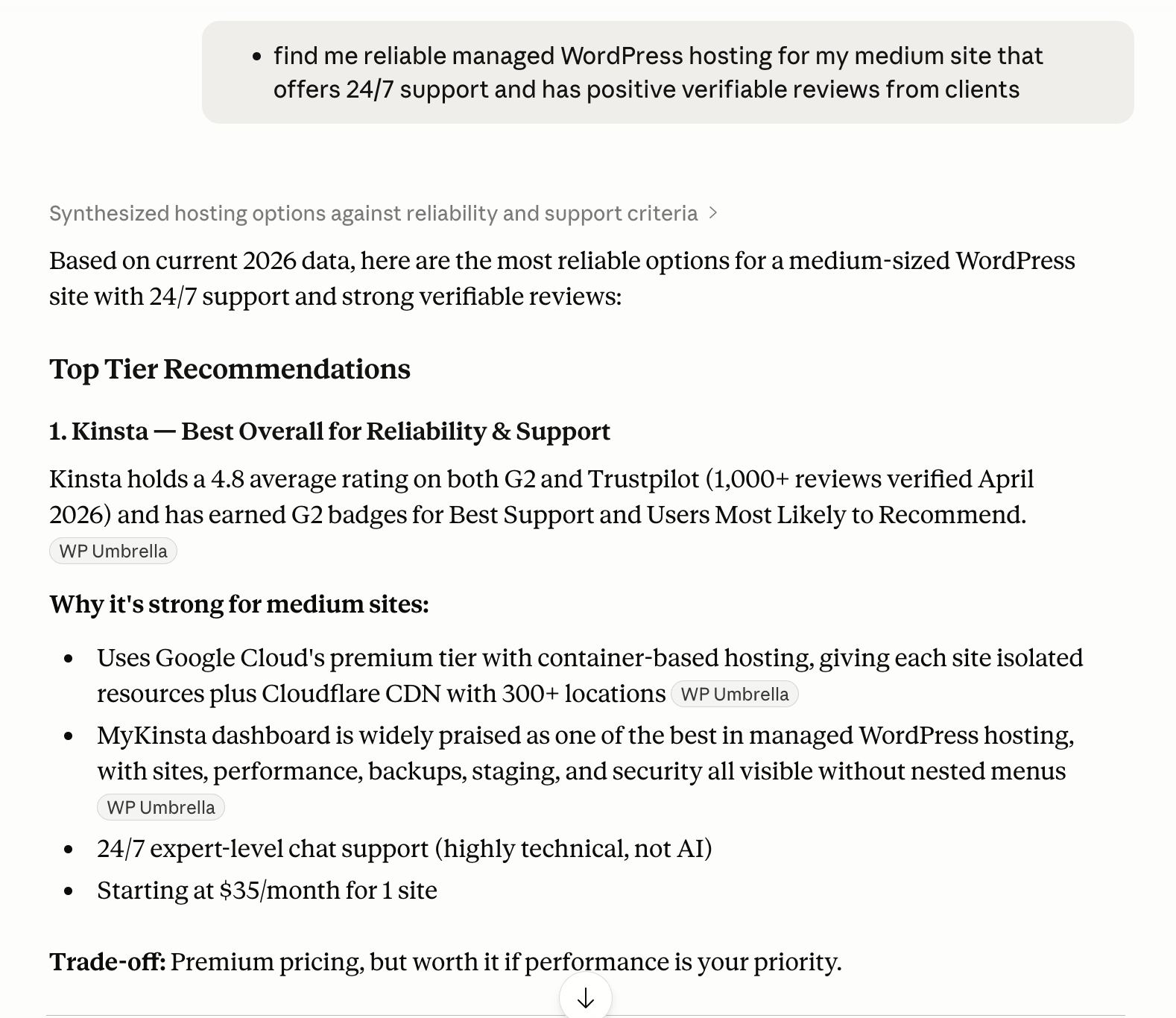
In all these contexts, being in position 1 with YOUR BRAND SITE doesn't mean much. But ranking high in third-party reviews, mentions, and recommendations is still valuable.
It’s worth mentioning that I’m not affiliated with Kinsta in any way, being neither their client nor affiliate.
What matters instead:
- Can the AI agent or LLM find you and verify your legitimacy?
- Are your key facts, credentials, and offerings structured in a way machines can parse?
- Do you appear credible and trustworthy in the sources that train AI systems?
- Is your brand discoverable through the new pathways people are actually using?
This is the real SEO problem your customers have. And most SEO agencies haven't figured it out yet.
The Difficult Questions You Need to Answer Now
- What is your actual business? If it's "rank keywords," you're in trouble. If it's "ensure your business is discoverable and trustworthy when potential customers find you, however they search," you have a future.
- Are you preparing for 2024 or for 2027? Google rankings will matter for 2–3 more years. But the transition is already happening. Clients who don't prepare will get left behind. So will agencies that don't help them.
- What signals matter in the discovery paradigm? Not Google rankings. Think: brand mentions, structured data, verification, reviews, authority in the training data, agent readiness, trust frameworks.
- Are you building a moat around Google, or around genuine customer value? If your competitive advantage is "I know how to game Google," that's easy to commoditize. If your advantage is "I understand how to make you discoverable and trustworthy in an AI-driven world," that's hard to replicate.
Conclusion
Kodak had time to transition to digital, but it deliberately chose not to.
BlackBerry could have rebuilt itself as a software company. It chose not to.
Don't let your SEO business be the next cautionary tale.
The time to reposition is now, before the market forces the transition on you.
It’s worth mentioning that some people oppose AI search, arguing that Google ruins the internet and that they prefer to visit sites and gather information themselves. Are they right, or do they sell Blackberries to people who want an iPhone?


No comments yet